




The misunderstood asset class
Stablecoins were initially utilized in the crypto ecosystem as a mere technical support. They were intended for value transfer only, not for value storage. For a long time, they were operating in the background of the markets, unnoticed by retail traders who were after the volatility, and labeled by traditional investors as cash-like with regulatory risk and thus, not worth their time. That perception is now dangerously outdated. As the market enters 2026, stablecoins have transcended their role as infrastructure and are now seen as a strategy. In a scenario characterized by constantly higher interest rates, divided liquidity, and more and more picky capital allocation, stablecoins have slowly but surely turned into one of the most asymmetric tools in global finance.
They provide yield without the risk of losing one’s capital over time, liquidity without the drawback of being exposed to the market, and flexibility without being tied down. At this moment when both stocks and cryptocurrencies are trying to cope with the macroeconomic reality as far as their valuations are concerned, stablecoins are positioned right in between patience and power. The situation is not one of safety in the conventional understanding of the term. It has more to do with how one is positioned.
The macro regime has changed forever.
Some combination of risk, or none at all, and power or decay, was and still is the flash words of the global economy that have endured for years. This has been the general perception of the market that has fed through the economies of the whole world, no matter how different they are, as if they were all connected and dancing to the same tune. There is, however, one change in the markets that wholesale through, and that is the advent of high-interest rate environments. The cost of capital has returned as the economy has gone through the process of a total uplift and change of gears. The transition to the new regime where high-interest rates become the norm has been a combination of growth, and that could be the only lesson learned from the pandemic.

It has taken this crisis to expose the very weak nature of the already overstretched economic systems. This is truly a global challenge and more so for advanced economies that could only look towards Central Banks for support. On the other hand, Emerging Markets wonder what is happening next with the rate of their domestic currencies depreciation against the Dollar? That would also be felt in developing economies through lower export prices and hence lower incomes and potential poverty. So, do we need the customs that were already seen as cumbersome and inconvenient when the changes were announced for legacy cash instruments? Let us look at some market-friendly examples of where and how Stablecoins could help.
Yield without narrative risk
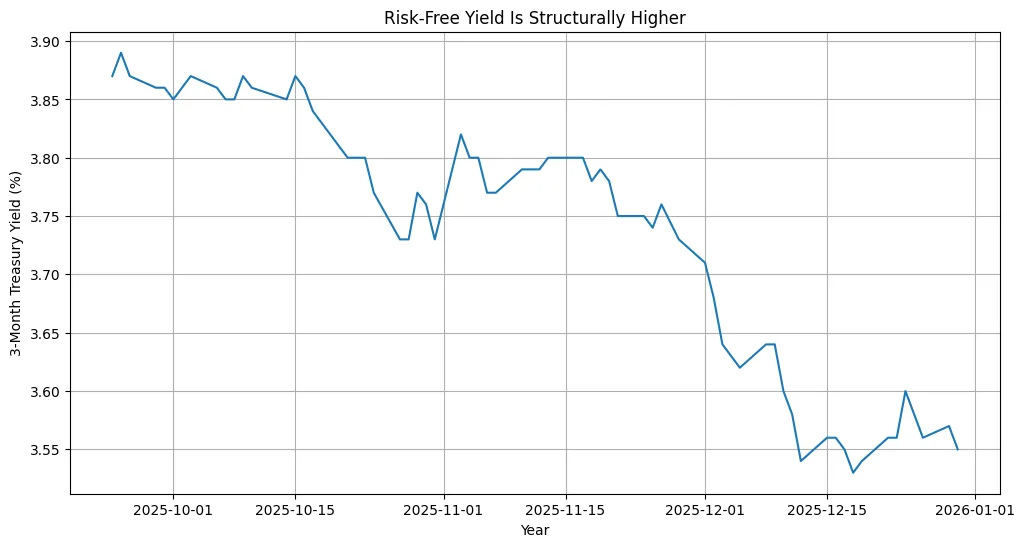
One of the most underappreciated aspects of stablecoins is that their yield is structural, not speculative.Unlike token yields that depend on emissions, growth assumptions, or perpetual risk appetite, stablecoin yields are increasingly tied to real economic activity. Treasury-backed reserves, short-duration instruments, and on-chain lending markets aligned with real demand have created a yield floor that persists even during market drawdowns.This matters because most asset classes in 2026 will be forced to justify their valuation through narratives.
Growth equities must explain margins in a slowing economy. Crypto assets must defend token supply dynamics in an era of lower speculative inflows. Even commodities depend on geopolitical volatility to outperform.Stablecoins do not require belief. They require discipline.Yield earned while waiting is not a consolation prize. It is an active strategy that preserves optionality while compounding quietly. In a market defined by false starts and delayed cycles, that patience becomes an edge.
Liquidity is the asset, not the trade
One of the most significant errors that investors do is considering liquidity a background condition instead of a position.In 2026, liquidity will be difficult to obtain. Capital will move between sectors, regions and asset classes, often without any warning, in an unequal manner. The ability to move instantly, to take large positions quickly and to exit without any friction will be more important than being the first to any single story.Stablecoins are great in the very areas where other assets fail.
They allow investors to be completely liquid while at the same time being economically involved. They are like dry powder that not only earns interest but also hedges and deploys at the same time. This is even more important in the crypto market where volatility is concentrated around events and not trends. There will be quick breakouts, violent corrections, and narrow opportunity windows. Investors who are fully allocated will not be able to take advantage of them. The ones with stablecoins will be the ones to set the tempo.
Regulatory gravity is working in their favor
Contrary to popular belief, regulation is not a threat to stablecoins in 2026. It is their catalyst.As policymakers move to formalize frameworks around digital assets, stablecoins are the easiest category to integrate into existing financial logic. They resemble money, behave like money, and solve problems regulators already understand: payments, settlement, transparency, and auditability.
This regulatory clarity creates a moat. While speculative tokens struggle under scrutiny, stablecoins gain legitimacy. Institutions that remain hesitant to touch volatile crypto assets increasingly have no issue holding, transacting, or settling in stablecoins.The result is a two-tier crypto market emerging in real time. One tier competes for narrative capital. The other absorbs structural demand. Stablecoins sit firmly in the latter.
The psychological advantage that no one is considering
The market transactions are not exclusively about the profits. They indicate the behavior of the investors when the market is under stress. Most investors are still not aware that stablecoins give them a psychological advantage. They cut down on the number of decisions one has to make daily. They take away the burden of the need to be constantly acting. Investors can now watch the market without incurring the cost of opportunity. In a market where the constant buying and selling has resulted in a decrease of performance, the power to wait without being penalized is very attractive. Stablecoins convert patience from a passive quality to a strategic one.
They permit a non-action that is often the most profitable one in late-cycle conditions. This is especially important in the case of cryptocurrencies where over-selling due to emotional reasons takes away more capital than poor analysis. Stablecoins are like a stabilizer. They help the portfolios withstand the aggressive changes in trends.
Stablеcoins play a significant role in linking the traditional financial system with the new one.
By 2026, stablecoins are related not only to the crypto market but more so to the whole finеtech sector. They have linked up in the pеrplexing fraud between the best part of finance and the least one. In the traditional finance sector, clearing of deals, transferring of assets, hedging of risks, and conducting treasury activities are among the uses made of them.
Besides being involved in retail, corporate processes, international payments and safekeeping of huge amounts of money by banks or places in general, they are gaining acceptance more and more. The increase is not because of a bubble but rather due to functionality. Stablecoin usage is eliminating the brioo, cost, and time which are parts of the payment systems that could hardly work together. The utility of stablecoins is not showy but is steadily gaining ground. Essential assets are not causing excitement in the market most of the time. Rather, they create a cycle of need or dependency.