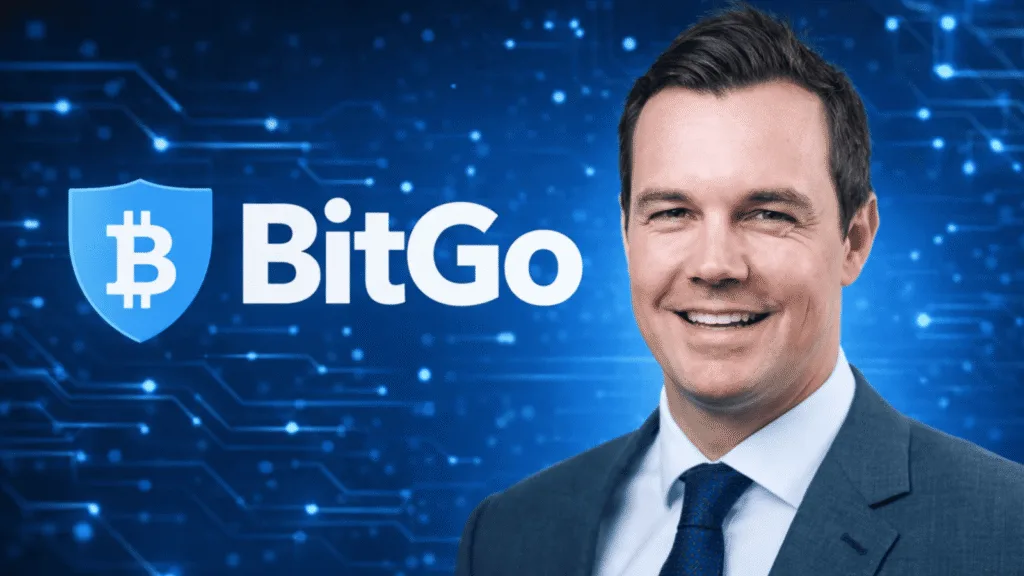



BitGo, the crypto infrastructure firm based in the U.S., has emerged among major headline grabbers this year. After clocking a high-stakes $2.1 billion debut on the NYSE in January, the Web3 firm secured the National Trust Bank Charter in the U.S.
Having hit back to back regulatory milestones in the last three months, Nick Coombs, BitGo’s Managing Director for sales in the MENA region sat down with Coin Headlines for an exclusive chat.
During the course of the conversation, Coombs essentially gave a glimpse into BitGo’s approach on the ongoing crypto regulatory changes around the world and the company’s roadmap for 2026 especially at a time with company CEO Mike Belshe has spoken about his idea of making BitGo the “AWS of digital assets.”

Highlights from the conversation
Coin Headlines: BitGo reportedly secures eight percent of all on-chain Bitcoin transactions. Under the ongoing pro-BTC regulatory overhaul, what do you think international regulators are missing on?
Coombs: One of the biggest gaps internationally is that many regulators still assess Bitcoin and stablecoins primarily as speculative assets.
Bitcoin underpins settlement, collateral management, treasury allocation, and cross-border value transfer. Stablecoins operate as programmable payment rails and digital dollar access points.
Another key area that remains underrepresented is the full integration and risk-based recognition of advanced custody technologies like multi-sig wallets and qualified cold storage protocols in global standards.
Dubai’s Virtual Assets Regulatory Authority (VARA)’s regulated framework emphasises requirements for custody and related services, including strong governance, security protocols, and client asset segregation.
Regulators could better incorporate these crypto native safeguards into rules and licensing criteria, ensuring they reward rather than penalise robust security models.
Coin Headlines: What was the biggest internal hurdle during your recent IPO, and what impact has it had on the company’s international reputation
Coombs: Going public was, in essence, a governance event. It elevated internal discipline around disclosure, risk management, and fiduciary oversight while signalling to international markets, particularly in the MENA region, that BitGo is capable of meeting the rigorous standards demanded by banks, sovereign-aligned funds, and regulated financial players.
Regulatory oversight and public-market discipline are enablers, not obstacles. Together, they allow digital asset infrastructure to scale responsibly and integrate with traditional finance globally.
Coin Headlines: What can you share about YZi Labs’ investment in BitGo’s IPO?
Coombs: The backing from groups like YZi Labs was a significant vote of confidence in our infrastructure. We were also very excited that BitGo achieved a market valuation of approximately $2.1 billion after our debut on the NYSE. For us, the number represents the trust that we have managed to build over the last decade.
Coin Headlines: BitGo has received its approval from the U.S. Office of the Comptroller of the Currency (OCC) to foray into traditional banking services. What is the status on that? Any similar plans slated for the UAE in the coming year?
Coombs: Securing the OCC approval to convert into a Federally Chartered National Trust Bank was a game-changer for us. It allowed BitGo to operate under a single, uniform federal supervisory regime across all 50 U.S. states. This is the ‘gold standard’ of regulatory certainty. It also gave us a certain credibility.
While the focus since receiving the approval in December of 2025 is on the U.S. federal charter, BitGo maintains a global presence with multiple regulated entities. The company is actively engaging with regional regulators like VARA to establish frameworks that emphasise custody licensing, capital adequacy, governance, operational resilience, and client asset protection.
The broader goal is to provide institutional clients across the Middle East with the same trust and security standards that govern BitGo’s U.S. operations.
Coin Headlines: BitGo’s Dubai entry had made it to the headlines last year. Dubai’s BitGo branch has progressed from a custody-first approach to a broker-dealer. How has the market response been?
Coombs: The market response to BitGo’s transition in Dubai has been exceptionally positive. We’ve progressed from a “custody-first” approach to a full Broker-Dealer model because that’s what the region demanded.
By integrating our OTC desk and electronic platform with our VARA-regulated custody infrastructure, we are helping solve the fragmentation problem.
Our clients can now trade, settle, and secure assets seamlessly within a regulated framework, using local banking facilities and AED/USD support.
Coin Headlines: Of of the array of services BitGo provides — custody & security, trading & lending, staking services, infrastructure, regulated banking — which ones are working most in the UAE and which ones are lacking?
Coombs: BitGo MENA is currently authorised to offer custody, staking and trading services under the two VARA licenses it holds in the UAE.
We have seen significant demand to use the integrated OTC desk and electronic trading functionality, which is accessed via the regulated wallet infrastructure.
This delivers regulated spot trading across hundreds of digital assets and stablecoins, with AED and USD support for fiat on/off ramps into local banking rails.
This is paired with deep liquidity from top-tier market makers, competitive execution, and direct settlement into client custodial wallets maintained under our VARA-regulated custody framework, reducing the need for our customers to use third parties and reducing counterparty risk.
Coombs, who joined BitGo in July 2022, has said that this year is going to be a pivotal one for the crypto industry. The company will continue partnering with international institutions that are looking to allocate capital to the crypto market.