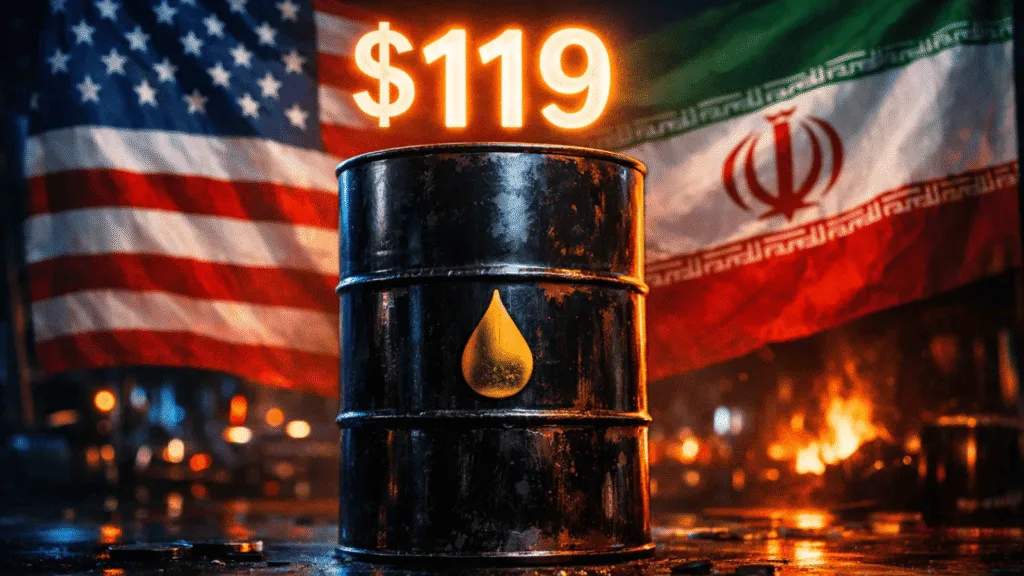



The price of Brent crude surged above $119 per barrel on Thursday, while gold slipped below $5000 per ounce, a sign that metals may not be able to hold their weight as safe haven assets in the current market.
The update comes after oil prices topped $100 per barrel, a rise in commodity prices that came alongside a Bitcoin rally.
Oil market prices continue to appreciate in response to Iranian strikes on critical infrastructure across the Middle East, including Qatar’s LNG facility, a key airport in the U.A.E.’s emirate of Dubai, and Saudi Aramco-owned facilities.

The latest occurrence in the conflict was a series of attacks on infrastructure in the Middle East carried out by Iran, after Israel targeted Iran’s South Pars gas field. Trump has weighed in on the issue, promising to blow up “the entirety” of the gas field if Iran decides to continue targeting Qatar.
At the time of writing, the prices of oil and gas indexes were as follows:
- WTI Crude: $97.81 (+1.55%)
- Brent Crude: $114 (+6.21%)
- Murban Crude: $128.8 (+10.34%)
- Natural Gas: $3.197 (+4.31%)
Experts say possibility of further rate cuts is unlikely
Head of commodity strategy Ole Hansen said the effects of the war have increased expectations of inflation, making rate cuts around the world an unlikely option as countries now anticipate rising energy costs could impact consumer prices.
“The surge in oil and refined product prices—particularly diesel—has reduced the likelihood of near-term rate cuts and, in some cases, pushed market pricing toward a “higher-for-longer” rate outlook,” said Hansen.
“In the current environment, geopolitical stress combined with rising energy prices tends to channel capital into dollar-denominated assets. This creates a competing safe-haven dynamic where gold’s traditional role is partly diluted by a firmer dollar,”
The Federal Reserve opted to keep rates as they were in its latest meeting, suggesting a keen eye on the Iran-Israel conflict. Century Financial CIO Vijay Valecha said investors were scaling back their expectations for more than one rate reduction in 2026, saying,
“…Central bankers continue to view energy-price jumps triggered by regional tensions as temporary, providing no justification for tightening. So rate hikes also are ruled out at this point of time.”