

Economist Peter Schiff has warned that global financial markets could face significant turbulence if investors begin to anticipate a worsening outcome in ongoing geopolitical conflicts.
Schiff states that the markets may be undervaluing the potential economic impact of the war, particularly if the conflict escalates or extends beyond current projections.
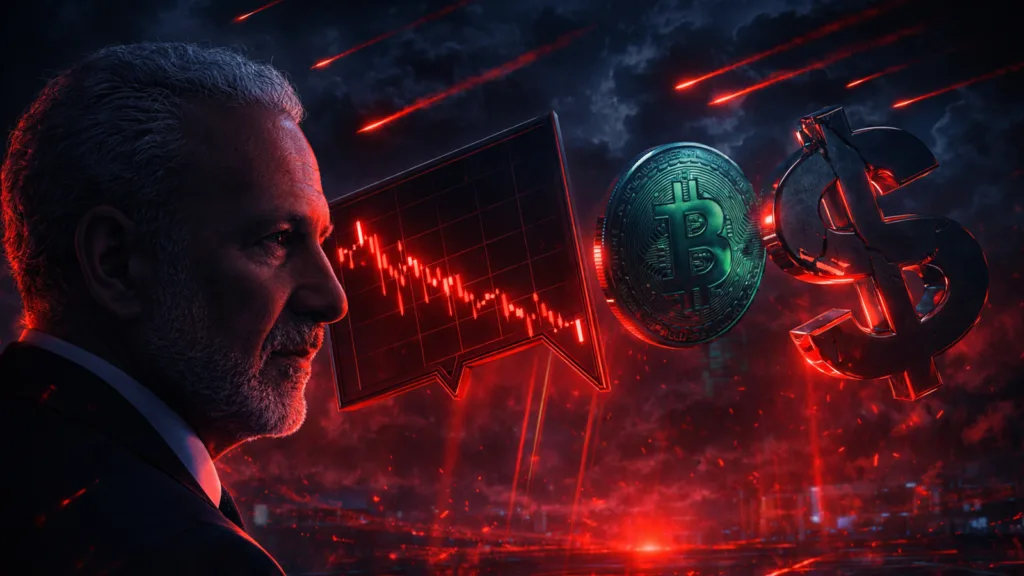
Schiff also highlights that when investors factor in a more negative outlook concerning the war, some of the key markets could experience a significant impact. In such a scenario, stocks, along with cryptocurrencies, would likely face pressure, according to Schiff.

During periods of uncertainty, investors tend to avoid volatile or speculative markets, including stocks and cryptocurrencies, due to dampened sentiment.
Dollar likely to retreat
Peter Schiff also said that an extensive conflict could put a lot of stress on the U.S. dollar. People usually think of the dollar as a safe haven to put their money in when things are uncertain, but long-term geopolitical tensions and economic problems could make people less confident in traditional currencies .
At the same time, Schiff thinks that prices of things like oil and gold would probably go up. During geopolitical crises, oil prices often go up because conflicts, especially those in major oil-producing areas, make people worry about possible supply disruptions. Higher oil prices can then spread to the rest of the economy, raising energy costs and possibly causing inflation in a number of areas.
In parallel, gold has traditionally been considered a “safe-haven” asset during geopolitical conditions. The precious commodity is often preferred to safeguard wealth during uncertain conditions when the traditional markets become volatile.
Schiff, being a traditional supporter of the precious commodity, also expects that the conditions will drive the prices of the gold significantly during this time.
Schiff’s views stay in contrast with crypto players
It is interesting to note that Schiff’s bearish outlook for crypto is contrary to other big names in the market.
As Coinheadlines reported earlier, Bitwise CIO Matt Hougan says the recent Iran attack revealed something bigger than just a short-term market reaction. In his view, the event showed how crypto has quietly become the world’s always-open financial system. When news of the strike broke on Sunday, traditional markets were closed, leaving investors unable to respond right away.
Crypto markets, however, were still running, allowing traders to react instantly on blockchain-based platforms.
Meanwhile, Arthur Hayes has argued that if U.S. military tensions tied to Iran continue, it could eventually create a supportive environment for Bitcoin and other risky assets.