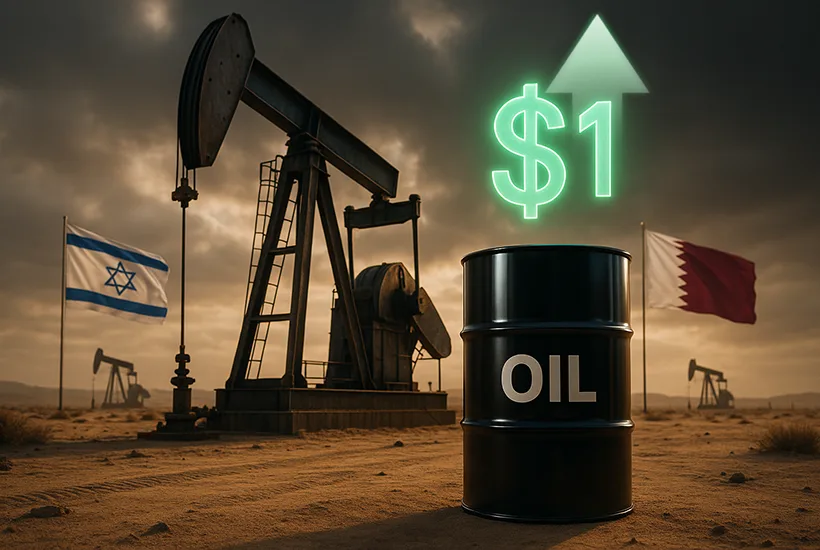



Oil prices climbed modestly after news broke that Israel conducted a missile strike on Hamas leaders in Doha, Qatar. The initial jump was sharp, with prices rising over $1 on the back of the unexpected escalation in the regional conflict. Most of those gains softened towards the end of the trading session.
Brent crude futures ultimately closed about 0.6% higher at $66.39 a barrel, while U.S. WTI rose similarly to $62.63. Both benchmarks had surged nearly 2% immediately following the strike, reflecting traders’ reaction to rising geopolitical risk. However, gains were limited as the U.S. swiftly assured Qatar that the incident would not be repeated.
Why does oil swing with Middle East instability?
Even though Qatar isn’t a major crude exporter, it plays an outsized role in gas exports and regional stability. Moreover, Qatar hosts a major U.S. military base and maintains diplomatic ties with Hamas. The recent strike has raised concerns about growing instability in the Gulf, which is crucial to the world’s energy supply.

Events disrupting the Gulf region often trigger risk premiums in oil markets. Yet, without actual supply disruptions, the market response has been cautious. Analysts note that this particular attack did not immediately threaten oil flows, helping cap price spikes.
Additional market drivers
The knee-jerk reaction to such tensions also comes against a backdrop of oversupply concerns. Rising global inventories and abundant supply, especially from the U.S. and OPEC+, continue to suppress sustained price hikes unless supply is physically impacted.
In fact, in its last meeting, OPEC+ members decided on a smaller-than-expected production increase of 137,000 bpd for October, which put pressure on supply and helped prices rise slightly.
Iran, the UAE, Turkey, and Saudi Arabia, OPEC+’s unofficial leader, were among the nations that denounced the strike on Qatar.