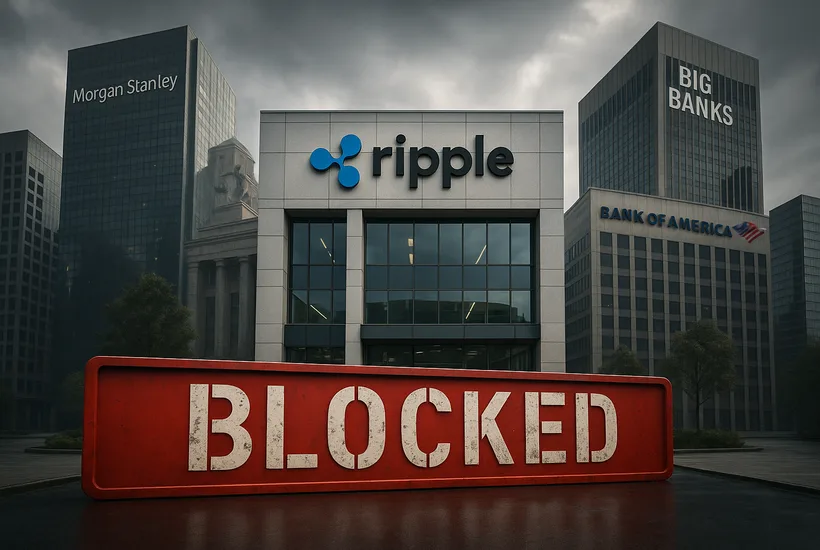



On July 5, Rippleofficially applied to the OCC to form a national trust bank, a strategic step to expand its reach into the U.S. financial system. The license would give Ripple the ability to issue its upcoming stablecoin, RLUSD, provide digital asset custody, and connect directly to the Federal Reserve payment system. This would mark a major milestone in Ripple’s long-term plan to serve as a bridge between the crypto world and traditional finance.
Powerful banks push back
Shortly after the application, the Bank Policy Institute filed an objection. Representing 42 of the largest commercial banks in the country, BPI claimed that Ripple’s application failed to provide sufficient clarity and transparency. Their complaint centered on the limited timeframe for public review, calling the 2.5-week window inadequate for assessing the implications of Ripple’s proposal.
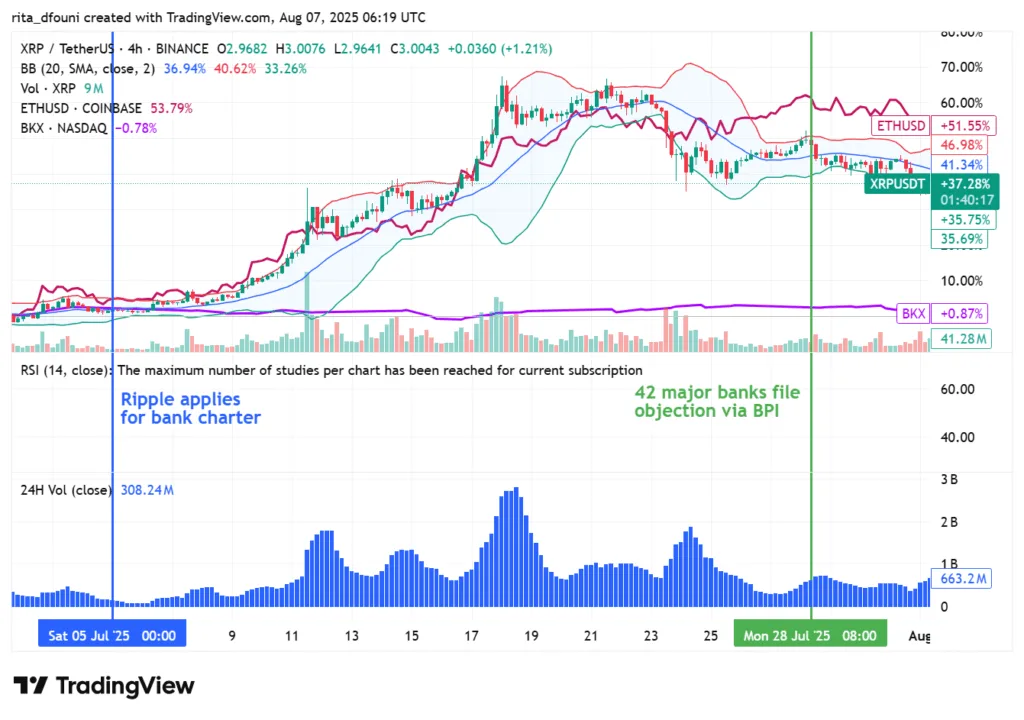
The chart above shows how XRP’s price compared to the U.S. banking sector (BKX index) during this period, offering a snapshot of market reaction to Ripple’s charter attempt and the institutional pushback.

Among BPI’s members are JPMorgan, Citigroup, Morgan Stanley, Goldman Sachs, and Bank of America all banks that stand to lose ground if crypto-native firms gain direct access to traditional banking infrastructure. For them, Ripple’s entry could reshape the competitive landscape of digital payments and custody services.
This isn’t the first time banking associations have pushed back on crypto firms entering their space. Groups including the American Bankers Association have previously raised red flags about applications from firms like Ripple, Circle, and Fidelity Digital Assets. Critics argue that the crypto applicants have not clearly demonstrated how they meet the operational and risk management standards required of trust banks. Others say that granting charters too quickly, without proper oversight, could undermine confidence in the U.S. financial system.
Regulation catching up to innovation
Still, the regulatory environment is shifting. The recently passed GENIUS Act introduces a legal framework for stablecoin issuance, while a White House report has called for more clarity around crypto firms seeking bank licenses. These developments suggest growing recognition that the future of finance will include blockchain infrastructure and that regulators must provide a pathway for compliant crypto firms to operate.
Federal bank charters would eliminate the need for state-by-state licenses and allow firms like Ripple to scale nationally. Experts say the demand for these licenses will likely grow, especially among crypto companies aiming to offer regulated services across the U.S.
Ripple’s struggle is more than a regulatory skirmish. It reflects a deeper power shift as fintech challengers increasingly pressure legacy institutions. If Ripple succeeds, it could open the door for other blockchain-based firms to access core elements of the U.S. financial system. If it fails, it may signal how far traditional banks will go to protect their territory.