
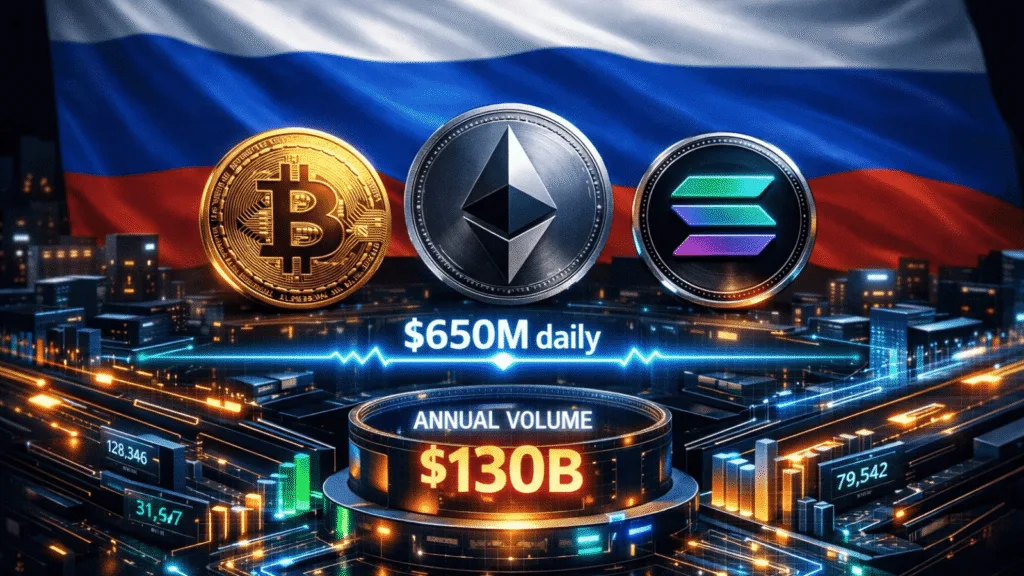



Russia’s crypto market is bigger than many might expect. The Ministry of Finance of the Russian Federation says daily crypto transactions in the country average around 50 billion rubles, which accounts for roughly $650 million.
The number adds up to more than 10 trillion rubles, or about $130.5 billion, a year.
Deputy Finance Minister Ivan Chebeskov shared the figures at the Alfa Talk conference, according to local outlet RBC.

The numbers highlight the widespread crypto use in Russia, with much of it still operating in a loosely regulated space.
Russia weighs tighter oversight as crypto activity expands
With crypto activity growing, authorities appear to be paying closer attention, weighing how tightly to oversee the expanding digital asset market.
“This is more than 10 trillion rubles a year happening outside the regulated zone, outside our attention,” Ivan Chebeskov said, pointing to just how much crypto activity is taking place beyond government oversight.
The remarks suggest officials are increasingly uneasy about the sheer size of a market operating largely in the shadows. Momentum is building in Moscow to bring that activity under clearer rules.
The Bank of Russia, alongside government ministries, is backing new legislation to formally regulate the sector.
Vladimir Chistyukhin said both the government and the central bank hope a crypto regulation bill can be approved during the State Duma’s spring session, a sign that tighter oversight may be on the horizon.
Russia moves to integrate crypto trading in mainstream finance
Russia is moving closer to bringing crypto trading into the mainstream financial system.
Under the new proposed rules, established players like the Moscow Exchange (MOEX) and licensed brokers would be able to expand deeper into digital assets.
MOEX already offers futures tied to Bitcoin and Ethereum, and plans to add products linked to Solana, XRP and TRON. If approved, they could also enter the spot market, allowing both professional and retail investors to trade, though smaller investors would face limits.
Right now, much of Russia’s crypto activity happens offshore. The Bank of Russia estimates Russians held nearly $12 billion on foreign platforms in mid-2025.
Officials say that means billions in commissions are flowing abroad each year.
By legalizing and regulating the sector at home, authorities hope to pull trading out of the “gray zone,” keep revenue inside the country, and compete more directly in Europe’s largest crypto market.