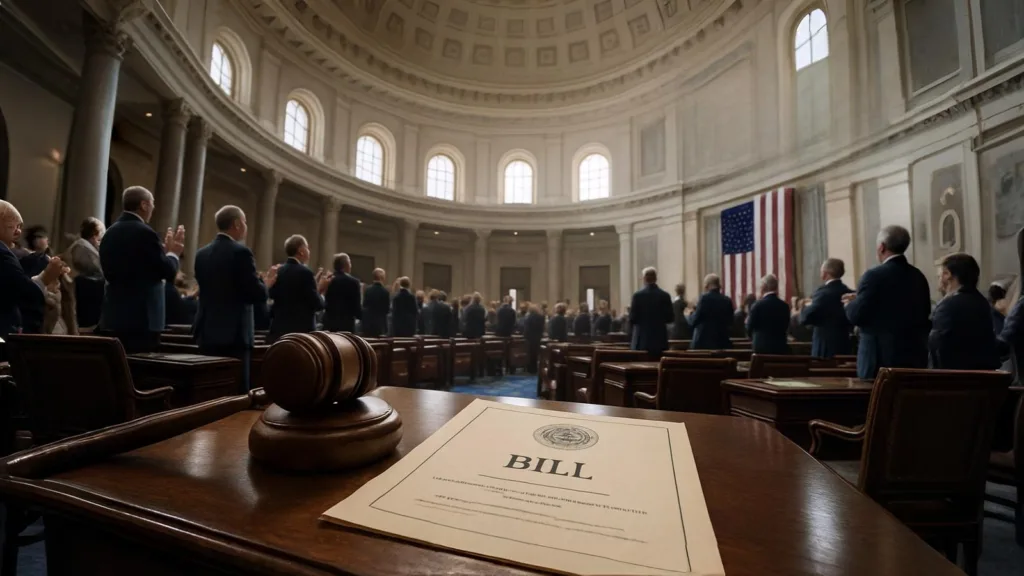



The U.S. Senate has passed a compromise funding bill, unlocking a path to reopen the federal government after 41 days of shutdown. The bill was discussed at length in the Senate, which gave its initial approval on Monday, and now heads to the House of Representatives for approval before reaching Donald Trump’s desk.
How was consensus reached?
Senate Republicans, holding 53 seats, needed at least 60 votes to overcome the filibuster threshold rules to move the bill. A small group of Democrats, eight in total, joined the effort, striking the deal in exchange for the future vote on Affordable Care Act (ACA) subsidies. Party leadership still remains divided, though. Many Democrats opposed the deal for lacking immediate subsidy protections, yet the shutdown pressures paved the compromise.
Key provisions of the agreement
For now, the Government operations have been funded at current levels until January 30, 2026. Federal workers furloughed during the shutdown will receive back-pay and further workforce cuts or mass layoffs have been barred until end of January. Republicans has agreed to place a December vote in the Senate on extending ACA premium subsidies; however, there is no guarantee of its passage. Moreover, a full-year appropriations for veterans’ affairs, agriculture, the legislative branch, and military construction funds have been approved till September 30, 2026.

The U.S. government shutdown was triggered when the federal funding expired on October 1, 2025. This disrupted hundreds of thousands of federal workers and critical services, as workers stood the risk of being furloughed, and services like air traffic control and agency inspections faced staffing crises. Food assistance programs such as the Supplemental Nutrition Assistance Program (SNAP) were delayed or cut in many states. many crypto regulations like SEC approvals for ETFs were put on the back burner during this time. With the Senate bill, the immediate risks of further furloughs and service disruptions ease, however, larger budget contours remain uncertain.