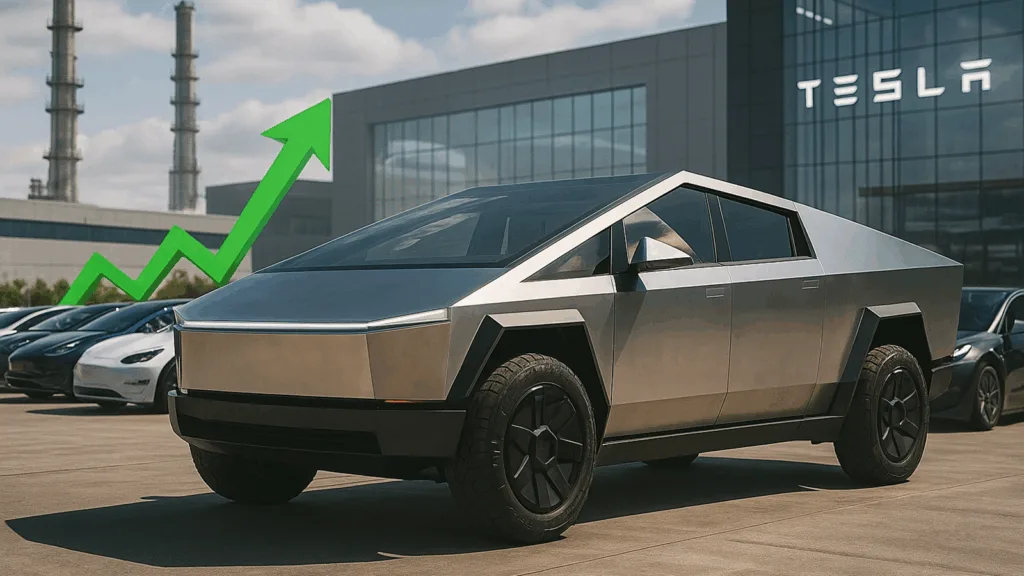



Tesla delivered 497,099 vehicles in the third quarter of 2025, according to its official press release. This marks a 7.4% year-over-year increase over Q3 2024’s 462,890 units. On the production side, Tesla built 447,450 vehicles in Q3, which includes 435,826 Model 3/Y units and 11,624 other models. Production thus lagged deliveries, indicating Tesla drew down some inventory to satisfy the surge in demand.
When compared quarter over quarter, Tesla’s Q2 2025 deliveries stood at 384,122 vehicles, with production of ~410,000. That implies the Q3 delivery tally is roughly 29% higher than Q2. Given this sharp rebound and outperformance relative to recent quarters, many observers are calling Q3 2025 Tesla’s best delivery quarter of the year so far. Especially since the uptick follows two quarters of year-on-year declines earlier in 2025. The news didn’t cheer traders or investors, as the stock slipped over 2% in trade on Thursday.

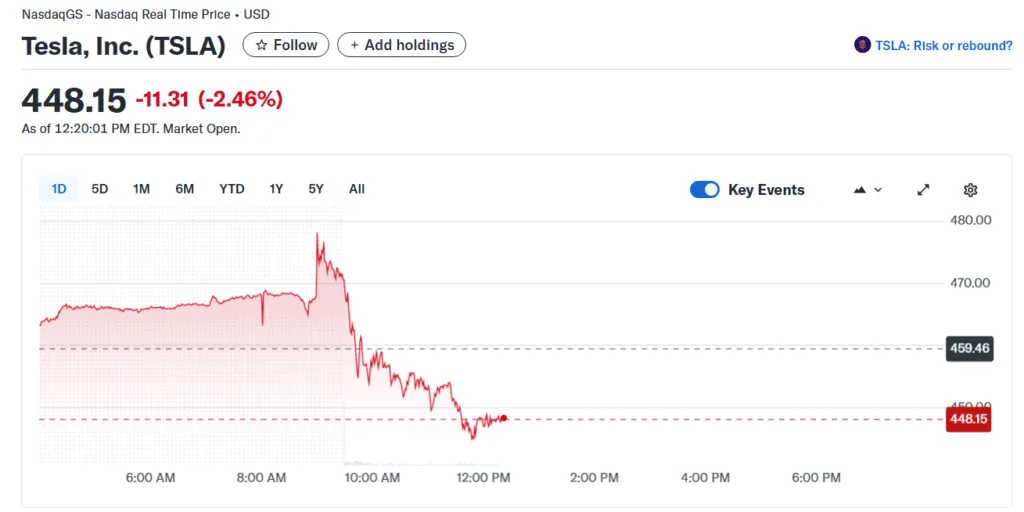
Source: Yahoo Finance
Tax credit pull-forward
A key driver behind the strength in Q3 was the looming expiration on September 30 of the U.S. federal EV tax credit of $7,500, which spurred a wave of last-minute buying. Tesla appears to have leaned into that, offering favorable financing, lease terms, or incentives to push sales earlier.
That said, the performance wasn’t uniform globally. Tesla’s European sales have reportedly weakened sharply amid intensifying competition and local market pressures. The U.S. surge mainly offsets those regional headwinds.
To hit full-year targets, Tesla needs to maintain momentum into Q4. Some Wall Street analysts estimate 2025 deliveries may total ~1.6 million units. If it does deliver on these lines, Q4 will have to be strong, though the expired tax credit may pose a drag.
EV market in choppy waters
2025 has been a surprisingly volatile year for the EV space. Tesla’s Q1 and Q2 saw deliveries fall sharply, as the company retooled factories and demand cooled. Beyond Tesla, the broader EV sector has contended with macro uncertainty, supply chain pressures, and shifting subsidy frameworks. Some rivals are betting on new low-cost models to regain market share, while others lean heavily into battery, charging, or software ecosystems to differentiate.
A cautious path forward
Q3’s strong delivery figure gives Tesla breathing room, but sustainability is the real test. With the tax credit gone and macro pressures looming, Q4 is riskier. Analysts warn that sales may pull back now that the incentive is off the table. If it can maintain pricing discipline, manage costs, and lean on its tech and branding, this quarter may mark the inflection point in a volatile year.