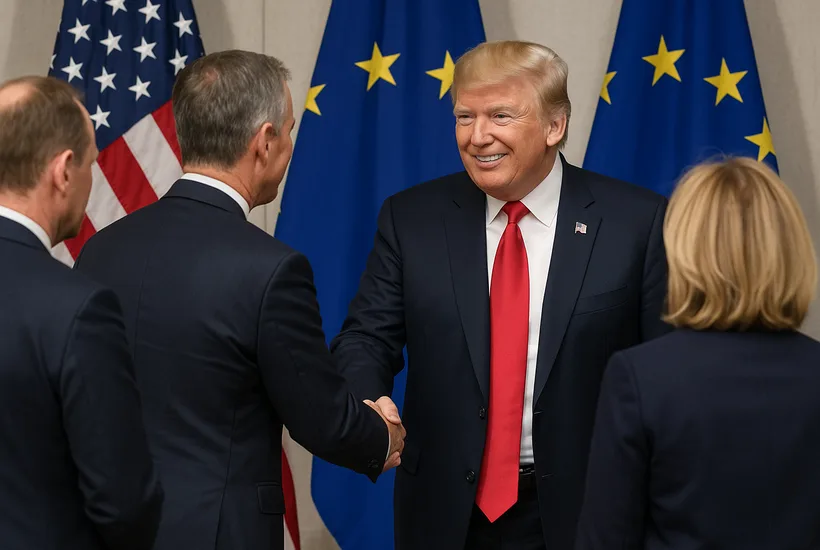



In a striking announcement that signals a shift in global trade momentum, President Donald Trump declared that the United States and the European Union have reached what he called “the biggest deal ever reached.” The deal, revealed during a press conference with European Commission President Ursula von der Leyen at Trump’s Turnberry resort in Scotland on July 27, 2025, outlines significant trade concessions and economic partnerships between the two powers.
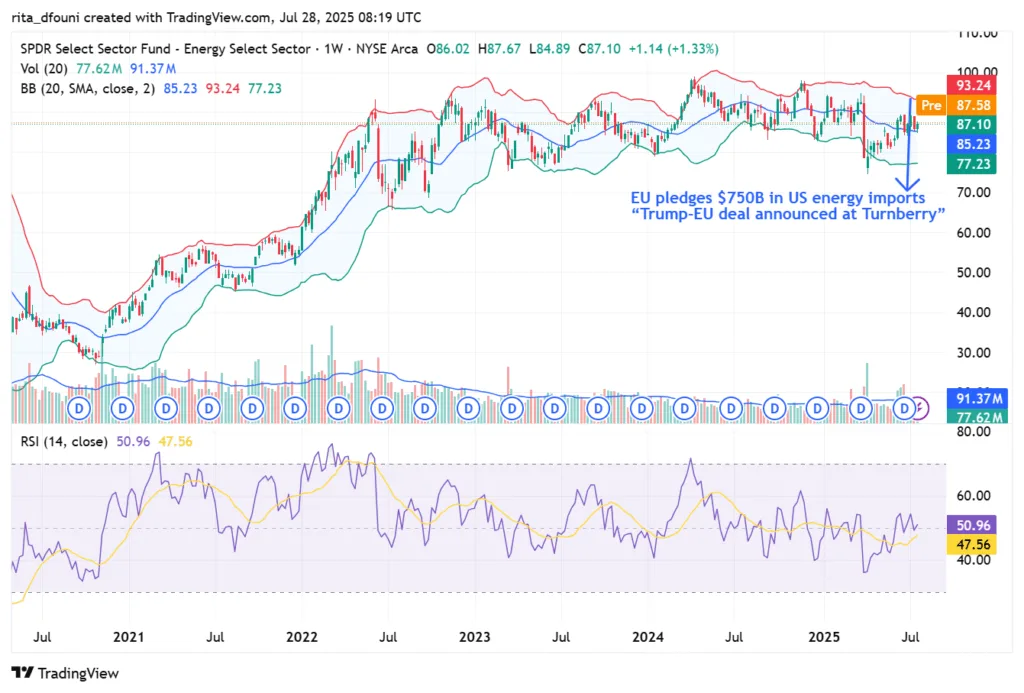
According to Trump, the agreement will include a mutual commitment to zero tariffs on industrial goods, opening trade between the U.S. and EU with no tariff barriers for specific sectors. A standout provision involves the EU pledging to purchase up to $750 billion worth of American energy exports, significantly boosting the U.S. energy sector and reducing European reliance on other markets.
Additionally, the EU has agreed to ramp up imports of U.S.-manufactured automobiles. While no precise figure was released, the President referred to “vast amounts” of automotive purchases, alongside a reduction in car tariffs from existing levels to 15%. This marks a notable shift in what has been a contentious trade category between the two regions in recent years.

U.S. secures historic alliances and massive investments
Perhaps most notably, European officials are reportedly preparing to invest up to $600 billion in the United States across infrastructure, manufacturing, and technology sectors. The scale and scope of this investment point toward a deeper strategic alignment between the U.S. and EU economies.
This landmark deal comes on the heels of a similar trade agreement signed with Japan earlier this week, suggesting a broader movement toward global trade revitalization following years of disruption and rising protectionism. While details remain to be formalized through legislative pathways, initial market reactions are expected to be positive, especially in the energy and automotive sectors.
With momentum building, the U.S. administration hinted that additional trade agreements are currently under negotiation, reinforcing a narrative of economic openness and transatlantic cooperation.