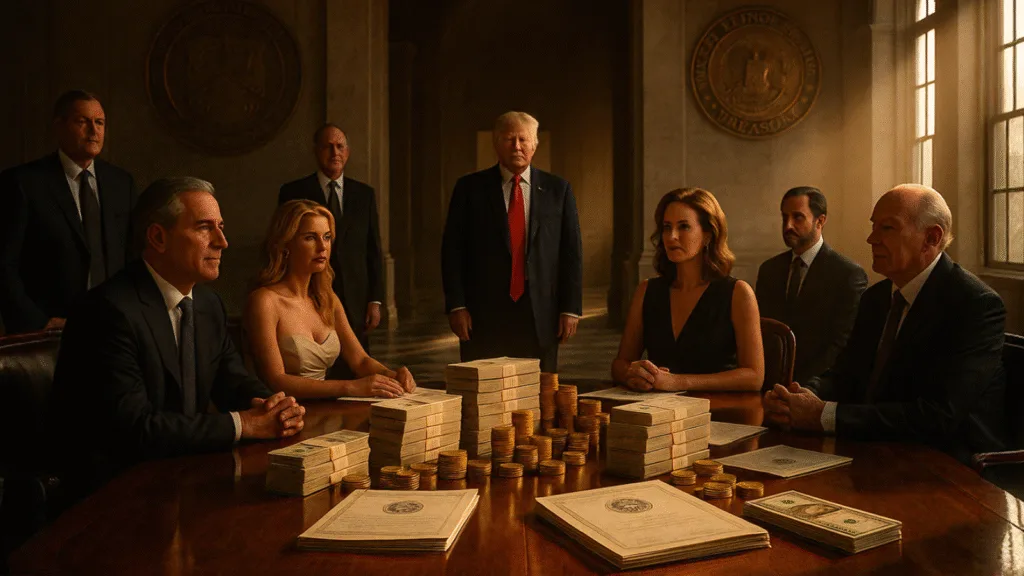



A New York Times investigation shows that under President Donald Trump, the U.S. Department of the Treasury and Internal Revenue Service (IRS) have quietly engineered tax-relief measures that favour ultra-wealthy investors and crypto firms. These moves bypass broad legislative negotiations and instead use regulatory routes and internal notices to trigger hundreds of billions in breaks.
What the report found
The investigation claims that the Treasury and IRS introduced proposed regulations that enabled large companies, including private equity and crypto firms, to sidestep key provisions of the 2022 corporate alternative minimum tax. This legislation was designed to ensure profitable firms pay at least minimum tax. However, Crypto firms, especially those dealing in ‘digital assets’, lobbied successfully for exemptions.

Benefits for real estate and crypto firms
Firms like Michael Saylor-led strategy, stating “mark-to-market” gains rules, gave it significant relief compared with other sectors. Strategy in its SEC filing, said that, following IRS’ interim guidance, that it no longer anticipates being affected by the minimum tax. Meanwhile, Natural gas exporter Cheniere Energy, referencing the same September guidance, revealed that it qualifies for a refund of the minimum tax it had previously paid, an amount totaling $380 million, according to the Times.
Similarly, for the real estate sector the Treasury and IRS, loosened rules on property ownership across borders and eased the tax burden for those investing in U.S. real estate from abroad. This tax relief was not widely advertised.
Many are now questioning how these reliefs could deepen advantages for these industries. They’ve raised questions of fairness, fiscal impact and competitive balance. These tax breaks reduce expected federal revenue and shift more of the tax burden away from the ultra-wealthy and large firms onto smaller taxpayers or public coffers. It’s not that previous administrations haven’t exploited these loopholes of bypassing Congress; however the Trump administrations is doing it more aggressively, the Times investigation revealed.