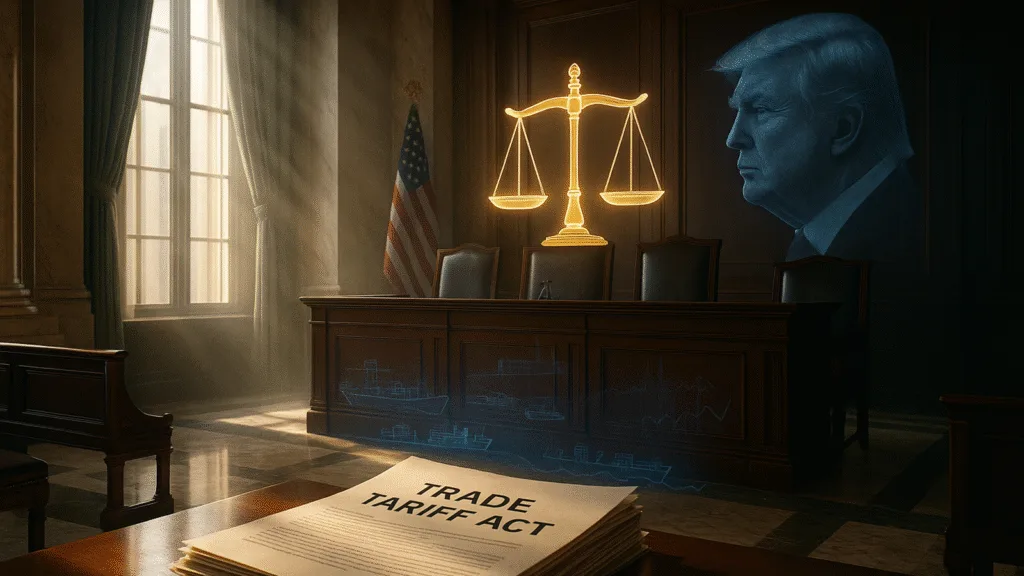



A coalition of twelve U.S. states, small businesses, and importers have filed a suit against Donald Trump’s sweeping import tariffs announced on April 2, 2025, which he called “Liberation Day”. According to an AP report, the legal argument is that the tariffs exceeded presidential authority under the International Emergency Economic Powers Act (IEEPA) of 1977. Trump, in a Truth post, called the hearing “one of the most important in the history of the country.”
The plaintiffs contend that merely citing persistent trade deficits does not meet the “unusual and extraordinary threat” standard required to declare an emergency. Moreover, the U.S. has run a trade deficit with the rest of the world for 49 consecutive years. Ever since its adoption, tariffs have rattled global markets and prompted economists to revise down their forecasts for U.S. growth. The baseline 10% tariff on most imports, and rates as high as 50% for key trading partners, introduced major uncertainty.
Many countries, since then, have conducted negotiations to revise the amount or have better bargains in place. Markets responded with concern about supply-chain disruption, inflationary pressure, and retaliatory risk. Yet despite the initial turbulence, the broader American economy has shown minimal signs of being affected.

Trump warns of ‘third world’ status for America
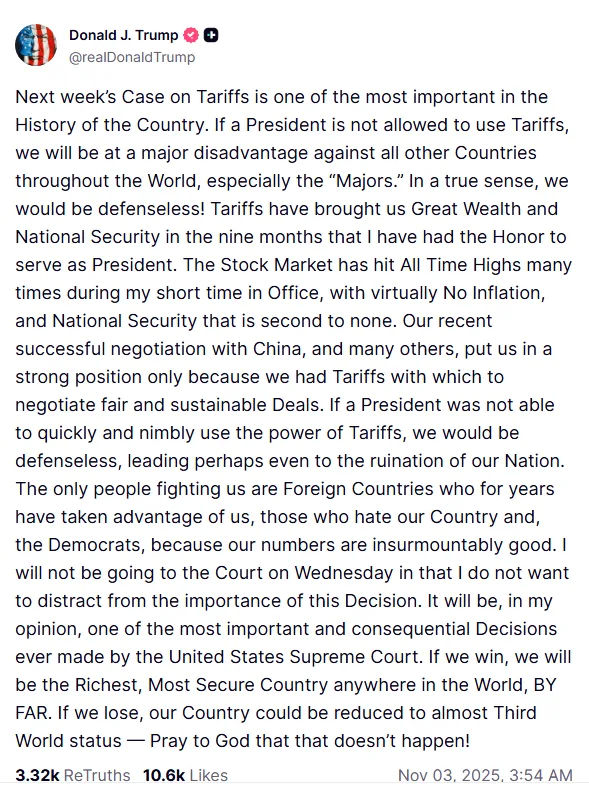
In a post on Truth Social, Trump defended his tariff move, stating that it has brought America ‘great wealth and national security’ in the nine months since its imposition. He said he would not be attending the hearing to avoid drawing attention away from its significance. In his view, a ruling in favor of the tariffs would solidify America’s position as the world’s most prosperous and secure nation. But if the Court strikes them down, he warned, the country could face a steep decline, even potentially slipping into near third-world conditions.
Details of the case
The U.S. Supreme Court will hear the case challenging Trump’s trade tariffs on November 5, 2025, in Washington, D.C. as part of the Court’s regular oral argument calendar. The hearing will be presided over by the full bench of nine Supreme Court Justices. The petitioners include Learning Resources, Inc. versus Trump as well as Trump versus V.O.S. Selections. The 12 states pursuing the case are Arizona, Colorado, Connecticut, Delaware, Illinois, Maine, Minnesota, Nevada, New Mexico, New York, Oregon and Vermont.
The case will be closely watched for its potential to redefine the limits of presidential authority over trade and emergency powers.