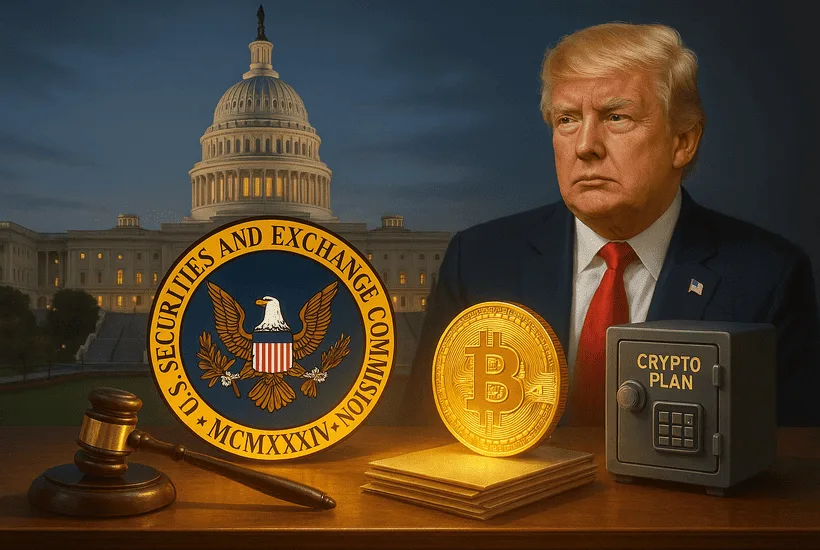



The U.S. Securities and Exchange Commission (SEC) has been urged to help align existing policies with the recent executive order that allows cryptocurrency investments within the 401(k) retirement plans. A total of nine senior lawmakers have collectively reached out to SEC Chief Paul Atkins this week.
House Financial Services Committee Chairman French Hill and Subcommittee on Capital Markets Chairman Ann Wagner among others have asked Atkins to assist the Secretary of Labor to adjust the existing laws in alignment with the executive order — “Democratizing Access to Alternative Assets for 401(k) Investors” — that was signed by President Donald Trump last month.
As per the order, the SEC is required to “Facilitate access to alternative assets for participant-directed defined-contribution retirement savings plans by revising its own applicable regulations and guidance, specifically noting that such facilitation may include consideration of accredited investor and qualified purchaser status,” the letter noted.

Congressmen Warren Davidson, Troy Downing, Michael V. Lawler, and Frank D. Lucas are among others who signed their names to this letter addressed to Atkins.
“We encourage the SEC to provide swift assistance to the Secretary
of Labor and to make any necessary revisions to its current regulations and guidance. We are hopeful that such actions will help the 90 million Americans that
are currently restricted from investing in alternative assets,” the letter added.
For now, Atkins’ response to the letter remains awaited.
Presently, the Labor Department is likely in the process of re-adjusting its engagement with crypto asses. Subsequently, fiduciaries like financial advisors are also expectedly conducting careful research to ensure that alternative assets are suitable for the plan and for its participants.
President Trump had already instructed the SEC to collaborate with the Labor Department to simplify the process of letting people invest in crypto through their retirement funds.
Soon after digital assets were made part of the U.S. retirement plans, analysts had warned that the step would add new layers of risks to the retirement portfolios for ordinary investors.