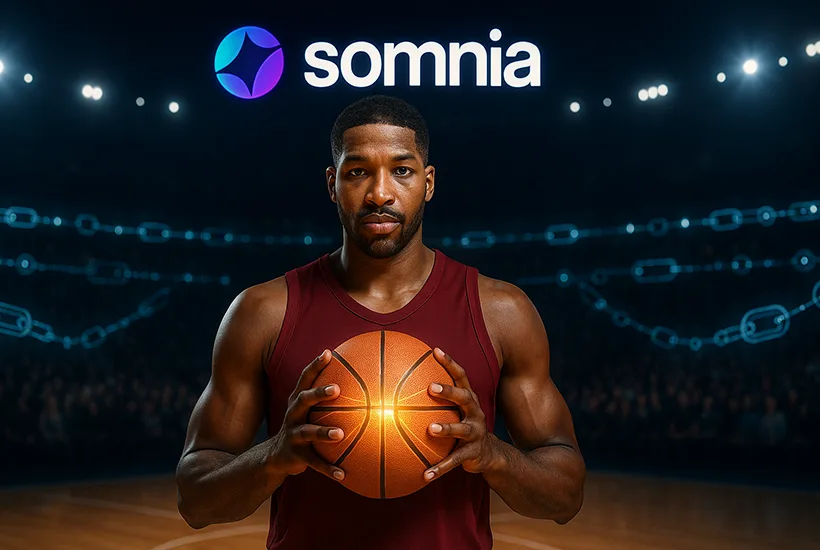



NBA champion Tristan Thompson, together with Improbable CEO Herman Narula and co-founder Hadi Teherany, unveiled a new Web3 fan engagement platform that will be launched in October. The platform is called basketball.fun. and coincided with the launch of Somnia, a new Layer-1 blockchain, which went live earlier in September.
Tokenizing players & real-time value
The platform aims to tokenize NBA players so that fans can engage more deeply. It will allow fans to speculate on rising talent, build rosters, make predictions, and earn rewards based on sentiment and actual performance. Unlike many fan-token or fantasy sports platforms, basketball.fun is structured to avoid using a “native token” at launch. Instead, its value system will be embedded in-app, reflecting real-time sentiment and performance rather than token-price speculation.

Somnia is being positioned as capable of high speed, scalability, and handling large trading and interaction volume. In its first two weeks live, Somnia reportedly logged billions of dollars in trading volume, according to a report on CoinDesk. The founders say they chose Somnia over more established chains like Solana or Avalanche because of its infrastructure orientation toward “fan empowerment,” gamification, and responsiveness.
Avoiding native token dependence & emphasis on fan power
There are already many existing fantasy sports apps and fan tokens that let fans hold tokens representing teams or players, vote in club decisions, etc. What distinguishes basketball.fun, or Somnia is the attempt to more tightly link real-time performance and sentiment to valuations, without heavily relying on a native token’s market price. Also, building on a newer Layer-1 focused on consumer-facing entertainment means prioritizing lower-friction, speed, and engagement tools.
For the blockchain space, this could push toward more “on-chain experiences” that are less about speculation and more about engagement and fandom. However, challenges like ensuring fairness in how performance & sentiment are measured are likely to crop up. The platform will also have to justify how rewards are structured and whether avoiding native tokens entirely is sustainable in the long run.