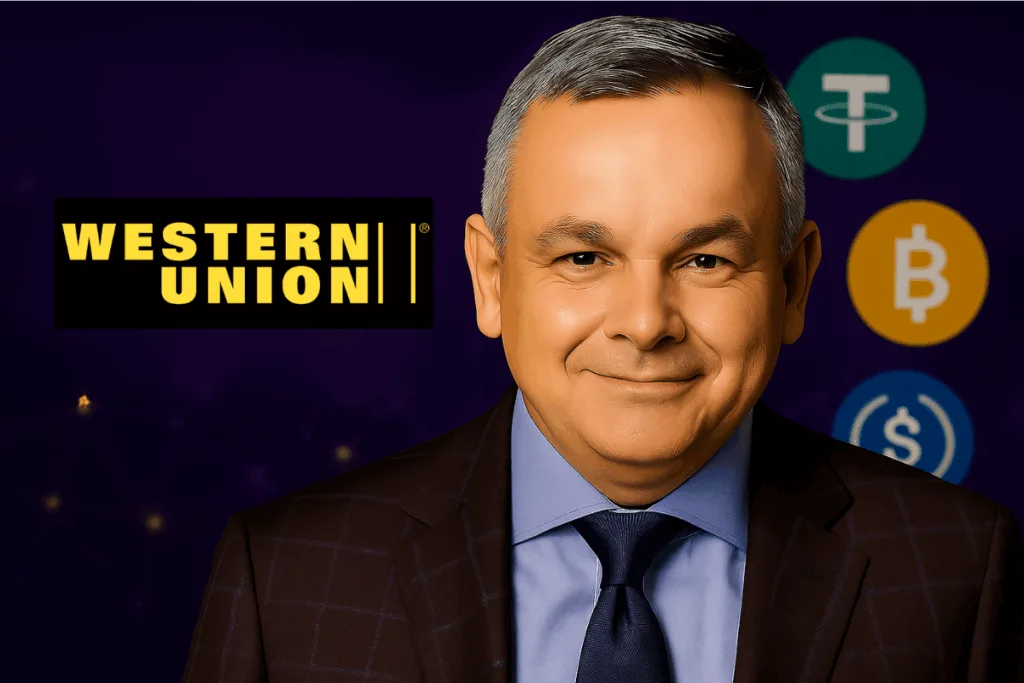



Western Union’s CEO, Devin McGranahan, is embracing the growing wave of stablecoin adoption, at least he seemed so, in his latest interview with Bloomberg. He is looking to position the global payments giant as a potential bridge between fiat and digital currencies. In contrast to many traditional financial leaders who remain wary of stablecoins, McGranahan sees them not as a threat—but as a strategic opportunity.
Speaking recently, McGranahan shared that Western Union has started exploring stablecoin-to-fiat settlement services, particularly in underserved regions such as Latin America and Africa. These services are designed to accelerate and simplify currency conversions, offering users a faster and more efficient way to transfer value across borders.
He explained that the company is actively forming partnerships with entities seeking on-ramps and off-ramps for stablecoins in various global markets. By integrating Western Union’s fund-in and fund-out capabilities, the goal is to empower people to seamlessly purchase and sell stablecoins—effectively bridging the gap between digital and traditional finance.

Regulatory pushback and industry divide
McGranahan also revealed that Western Union is considering offering stablecoin functionality within its customer digital wallets. These efforts would involve partnerships with global infrastructure providers, potentially including leading stablecoin issuers such as Tether (USDT) and Circle (USDC).
This pro-stablecoin stance puts Western Union at odds with the cautious tone adopted by many traditional institutions. In recent remarks, Bank of England Governor Andrew Bailey warned against the widespread issuance of stablecoins, expressing concern over their potential impact on the nature of money and the broader financial system. He cautioned that without proper regulation, stablecoins could present systemic risks to monetary stability.
Similarly, the International Monetary Fund has flagged regulatory ambiguity as a growing issue. In June, IMF Deputy Managing Director Bo Li noted that many jurisdictions still lack clear frameworks for classifying stablecoins—raising questions about whether they should be treated as currencies or financial assets.