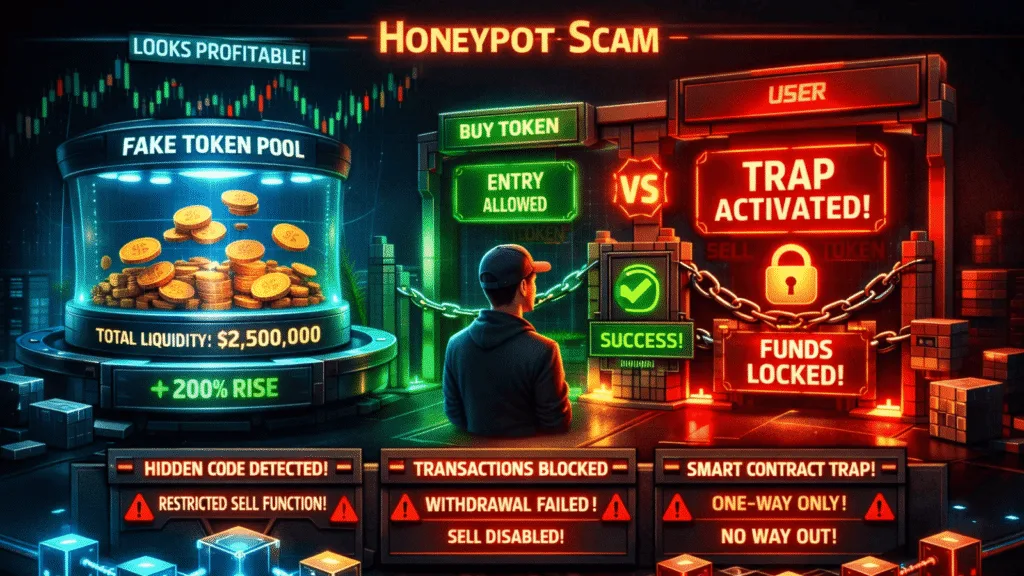



The world of cryptocurrencies is always changing. Every day, new tokens are created, decentralized platforms are always running, and in just a few hours, a popular topic can bring unknown projects to the forefront. But alongside innovation comes exploitation. A honeypot crypto scam is a common mistake people make in decentralized markets.
At first glance, a honeypot looks like an interesting chance. The token is now live, it looks like it can be easily sold, and early buyers may already be seeing profits. But when investors try to sell, they hit a wall. The deal doesn’t go through, or even worse, the value goes down slowly. It’s already too late by the time they figure out what’s going on.
Understanding how honeypot scams work is important for anyone interested in DeFi or new tokens.

Understanding the Honeypot crypto scam
The word “honeypot” comes from the idea of bait, which is a tasty trap that attracts people before catching them.
Essentially, a honeypot crypto scam lets people buy a token but not sell it. The trap is embedded directly into the token’s code. Money comes in, but it doesn’t go out. This is a simple but important result.
Honeypots are different from other scams because they use smart technology tricks instead of empty promises. The deal goes smoothly when someone buys the coin. But when they try to sell, the deal either makes it hard to do so or sets limits that aren’t clear.
How does a Honeypot work?
Honeypot scams are made within the smart contract structure. When a new token is released on a blockchain like Ethereum or BNB Chain, its rules are set by creators. These rules allow for open buying and selling in real projects as long as there is cash.
In a honeypot, makers put in conditions that make it hard to sell things. As an example, the deal could:
- Limit sales to wallet addresses that are known to and controlled by the hacker
- Put in place secret taxes that are so high that selling loses its value
- Reverses deals automatically when conditions for selling are met
Everything looks fine from the outside. The price of the token might go up if more people buy them. Charts may show that the value is going up. But the front falls apart as soon as someone tries to leave.
What makes Honeypot scams so effective?
Honeypots do best in places where things are always changing and there is a lot of uncertainty. A lot of buyers are looking for new tokens with the hope of making quick profits. Lack of time often makes study less thorough.
Decentralized markets make it easy for anyone to create and sell tokens with little oversight. Being open and honest makes people more creative, but it also makes it easier for scams to do their jobs.
It is the blockchain itself that carries out smart contracts. After a honeypot is set up, the rules function precisely as intended – regardless of whether those rules are harmful. You can’t get help from anyone, and you can’t undo the deal.
Honeypot vs. Rug Pull: Understanding the difference
A lot of people think that honeypots are rug pulls, but they’re not.
In a rug pull, developers take away liquidity from a trade pool. This causes the price of the token to drop right away. People who invested may sell, but there isn’t much value left.
It’s possible for liquidity to stay stable in a honeypot. The cost might keep going up. There are limits to what you can sell. The token may look good on screens, but it is pretty much stuck.
Both scams cause people to lose money, but they work in different ways.
Warning signs of a Honeypot
Beehives are used to trick people, but the people who own them can be on the lookout for signs of trouble.
People may know that a ticket has limits if they buy them a lot but don’t sell them very often. People can look at open blockchain readers to see the history of events. This could help them figure out what’s going on.
When smart contracts haven’t been checked, that’s not a good sign. What the code does isn’t clear since it can’t be seen by anyone or checked by people you can trust.
Too broad of marketing plans that offer quick cash can be scary. Criminals often make people feel rushed so that they will decide quickly.
Risks associated With Honeypots
What worries people the most is the chance of losing money. Most of the time, money that is put in a honeypot is lost forever.
Beehives not only cause instant losses, but they also make people less confident in autonomous systems. They make people question new projects and could lead to regulators looking more closely at them.
People who are just starting out in the crypto markets might not want to go any further after running into a honeypot.
How to protect yourself
You need to understand before protecting yourself. Take your time to research and understand before investing into anything. Be sure you know how far along the verification process is before you spend any money. You could also use tools that let you practice making deals to buy and sell things.
Don’t spend a lot of time or money until you know what’s wrong. Instead, try little things.
Big claims and sudden price increases don’t always mean that something is real.
The bigger picture
One important thing that honeypot scams teach us about freedom is that there needs to be responsibility when there is freedom. Blockchain gets rid of the need for brokers, but it also gets rid of some safety features.
As people learn more and tracking tools get better, it gets easier to spot contracts that are bad for you. Even so, con artists change how they work all the time. The best way to stay safe is always to learn.
Conclusion
A honeypot crypto scam is a deceptive smart contract designed to lure investors in while secretly blocking their ability to sell.Speed, energy, and attention to detail are all things that fraudsters use to their advantage when they set traps that could lead to long-term loses. Anyone who works in an open market needs to know how honeypots work, how to spot warning signs, and how to spend their money wisely. In the crypto world, it’s important to know what’s going on; it keeps you safe.