


Investing in cryptocurrency, while intriguing, can seem like a daunting decision. Data by Triple-a estimates that as of 2024, over 560 million investors were engaging with crypto worldwide. Market experts have, however, repeatedly advised first time investors to conduct thorough study and research before engaging with crypto assets, that have been infamous for posing financial risks through volatility and scams.
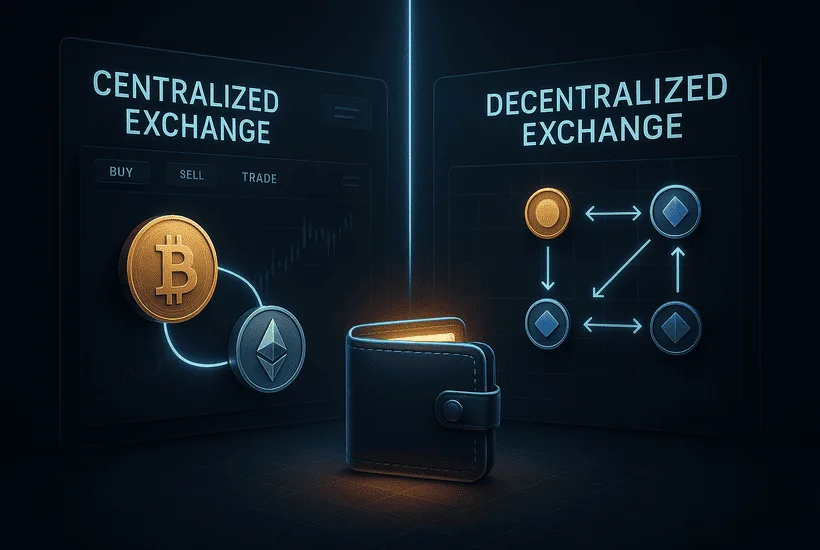
There are two major ways of investing in cryptocurrencies — via centralized exchanges (CEXes) and through decentralized exchanges (DEXes). In this article, we will understand the step-by-step process for taking the first steps towards crypto investing.
Investing via centralized exchanges
Centralized crypto exchanges are like traditional platforms that lets users trade stocks. These platforms are controlled by a single entity and are required to adhere to a set of compliance requirements, laid out by regulatory authorities. Binance, Coinbase, and Kraken are touted among the top names in the category of centralized exchanges.

Here are the steps to follow while investing in cryptocurrencies through CEXes:-
- Selection
Choosing a reputed and regulated exchange is key. Beginners must conduct an in-depth analysis of the history and security provisions of the exchanges that they may be exploring.
- Creating and verifying account
Centralized exchanges are required to collect the KYC details of their users. As part of this, beginners will need to submit their personal information including a government-verified ID. Submitting accurate details is crucial to get access to authentic information on app upgrades or preventative steps to prepare for threat detection.
- Depositing funds
Once the account is created, users will need to connect their bank accounts to deposit fiat currency into their exchange accounts. The same can be done via debit or credit cards.
- Purchasing crypto
Upon connecting the bank accounts, the users will be directed to the list of cryptocurrencies that are listed on the CEX. Investors must study the price history and market sentiment for the assets they are interested in acquiring. Investors can pick the amount they wish to invest into their choice of tokens and initiate the transaction.
- Storing assets
Investors, after purchasing the tokens, will be allowed to store their assets on the exchange wallets. They can also choose to hold their assets on internet-connected hot wallets like or offline hardware wallets like the ones offered by Ledger. Market analysts often suggest cold wallet solutions because their disassociation with web keep them protected against hack attacks or data loss.
While investing through centralized exchanges can appear safe, a bunch of risks can still put the investors at risks. Often, centralized exchanges charge higher trading and withdrawal fees. In addition, the requirement to provide personal KYC details would lead to a sacrifice in the anonymity quotient that comes with crypto transactions.
The most dangerous risk linked to centralized exchanges are that most of them hold the private keys of their user accounts. This makes CEX users susceptible to hacks, technical failures, or even regulatory roadblocks — which could cause financial losses to the users.
Investing via decentralized exchanges
Decentralized exchanges make for an important element of the Web3 ecosystem. They can be explained as peer-to-peer crypto marketplaces that let traders purchase and sell digital assets directly with each other. DEXes depend on blockchain-based smart contracts to automate the trading process — removing the need fornusing a centralized entity to hold funds and process orders.
DEXes essentially eliminate the role of central intermediaries like banks to process transactions. DEXes aim to recreate traditional financial services while keeping the anonymity element of crypto transactions intact.
Here are the steps to follow while investing in cryptocurrencies through DEXes:-
- Create a non-custodial wallet
Investors looking to tap into the DEX ecosystem first need to establish a non-custodial wallet — that will let investors secure their asset holdings. Trust Wallet and Phantom are among known non-custodial wallets.
- Secure a recovery phase
As part of the account setting up process, investors will be assigned a secret recovery phrase. This phrase should be written down and stored in an offline location. This phrase acts like the key to the user funds. If this phrase is lost, the investors could lose their funds permanently.
- Acquiring tokens
DEX investors need to secure their initial assets from a centralized exchange and transfer them to their non-custodial wallet. This wallet needs to be connected to the DEX from within the platform.
- Swapping tokens
DEXes allows users to swap the tokens they purchased from the CEX into
the assets of their choice. The DEX will then provide a quote to facilitate this transaction, which once accepted, completes the process.
- Confirm transaction
Investors must keenly review the gas fee and other details before completing the swapping transaction. Once the process is executed on the blockchain, the new tokens will land into the non-custodial wallets.
Uniswap, Curve, PancakeSwap, Balancer, and SushiSwap are among popular DEXes. It is notable that exploring the DEX ecosystem could be more complicated compared to centralized exchanges. DEXes do not allow investors to buy tokens directly with actual money. The gas fee to process these transactions could also be unpredictable and high — which could be a surprise for the DEX users.
Most importantly, DEXes do not offer customer support. Scammers often create DEXes to have people engage with the platforms and then execute a rug-pull.
Conclusion
It is advisable for beginner traders to foray into the crypto ecosystem through a CEX first as they provide a more secure entry point into the market. After gathering an experience in trading, traders could gather more control, privacy, or access to a wider range of tokens that offer more private transactions.
Thorough research, either way, is strongly advised to newer investors.