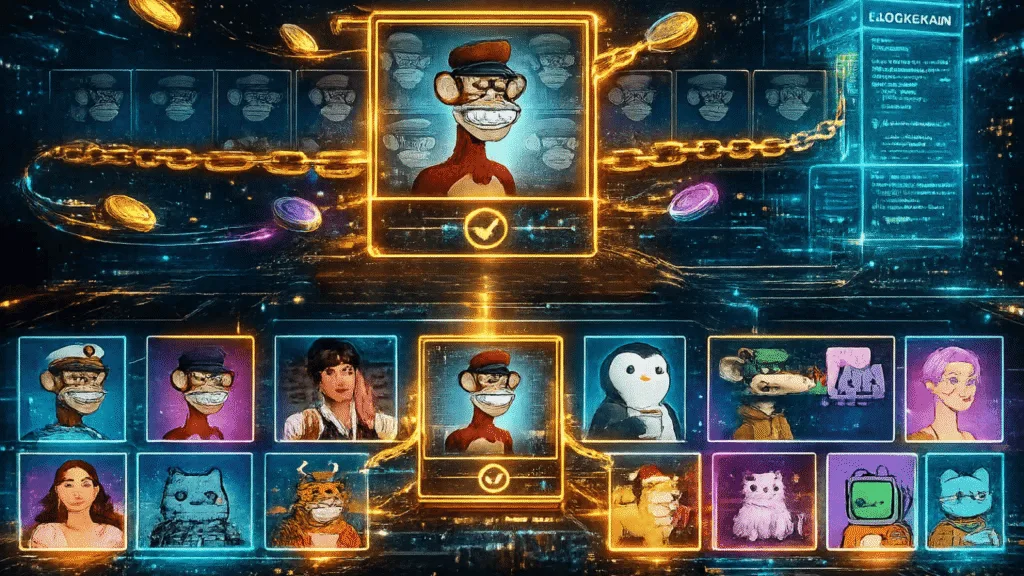



Blockchain, ever since it started to go mainstream in recent years, has ended up paving way for a plethora of new tech technologies that have gradually made inroads into our everyday lives. While cryptocurrencies gained the most traction in the blockchain world, Non-Fungible Tokens (NFTs) also managed to grab headlines repeatedly over the last few years, mainly for their appeal, financial values, reward-quality, and of course, the volatility.
NFTs, in simple terms, can be explained as the representation of anything — ranging from artwork to game characters, cartoons, content, pets, plants, and real estate among others on the blockchain.
NFTs surged into popular discussions seemingly in an instant. From digital art fetching millions to profile pictures serving as status symbols, NFTs rapidly transitioned from niche crypto experiments to prominent cultural discussions. Although the excitement has diminished from its height, NFTs continue to play a significant role in the blockchain ecosystem – frequently misinterpreted, yet certainly not insignificant.

NFTs fundamentally extend beyond mere art or collectibles. They offer a fresh approach to demonstrating ownership, authenticity, and uniqueness in the digital realm. To grasp the significance of NFTs – and their limitations – it’s beneficial to start with the fundamentals.
What is an NFT?
An NFT brings a proof of ownership of any unique thing that has been tokenized on a blockchain. Because of its “non-fungible” element, each NFT is unique and cannot be replicated.
Bitcoin, Ethereum, and NFTs are not the same thing. NFTs are special and can’t be traded for those other currencies.
Each NFT has its own unique set of data that makes it stand out from other coins. This information can be about digital art, music, movies, videos, in-game stuff, virtual land, or even tangible assets from the real world. The blockchain keeps a clear and easy-to-find record of who owns an NFT. This makes sure that everything is open and can be verified.
With NFTs, people can view the ownership of digital items to be established and verified publicly.
How do NFTs work?
NFTs are made with smart contracts on blockchain networks. A lot of people use Ethereum, but some also use Solana, Polygon, and BNB Chain.
When an NFT is minted, the smart contract stores important data on the blockchain. This information has the following:
- The address of the owner’s wallet
- A unique name for the token
- A connection to the item’s information
Digital files, like pictures and videos , are often stored by systems that don’t need to connect to the blockchain. The NFT, on the other hand, always knows who owns what.
The blockchain changes the list of people who own an NFT whenever it is bought, sold, or given to someone else. This way, it’s easy to keep track of past transactions.
Why are NFTs valuable?
There are many things that can change how much an NFT is worth, such as
- Most of the time, a small amount of something gets people more excited
- Being honest: Blockchain proof shows the real source
- Some NFTs are useful because they let you get things, use tools, or win gifts
- People who are active in groups think things are worth more
You should know that just because you have an NFT doesn’t mean you own the land. Most of the time, it just means you have a digital code that can be used to connect the object.
Different kinds of NFTs
NFTs aren’t just for games or art. These are different kinds of NFTs, some of them are:
1. Collectibles and art: This is the most well-known use of NFTs. People who like art can trade one-of-a-kind things with other art lovers.
2. Gaming NFTs: People who play video games can buy and sell things like items, characters, or land inside the game that they can trade with other people outside of the game.
3. Music and media NFTs: Artists and musicians use NFTs to give their fans records, special content, or early access to new releases.
4. Utility NFTs: If you own one of these, you can vote in decentralized communities and go to particular events.
5. Virtual real estate: On metaverse sites, people buy and sell digital land as NFTs.
How can you Buy or Sell an NFT?
To buy an NFT, you usually follow these simple steps:
- Create and setup your crypto wallet
- Use cryptocurrency to support it
- Link your wallet to a NFT marketplace
- Browse, buy, or bid
You make an NFT and put it on a marketplace, where you can usually set a price or hold a sale. Marketplaces usually charge fees to do business and use their site.
Benefits of NFTs
Numerous new ideas about digital ownership came about because of NFTs:
- Direct revenue for creators, no middlemen
- Royalties let artists get paid when their work is sold again.
- Ownership and authenticity that can be checked
- Access from anywhere in the world with just a wallet
These benefits show why NFTs are becoming more popular among artists and makers.
Risks and Challenges of NFTs
There are some good things about NFTs, but there are also some big problems:
- There are changes in the market, and prices often go up and down
- Thrill and excitement that often don’t have any real-world applications
- Taking things and making copies of them, like making fake collections
- On the blockchain, people worry about the world in a number of different ways
- Liquidity problems make it harder to resell something
Not all NFTs are worth something in the long run, and the value of many projects can drop quickly.
Best practices for NFT Beginners
To feel safe while looking into NFTs:
- Find out as much as you can about the person who is working on the project
- Don’t make your goals too big at first; instead, take small steps
- Avoid rushing just because they are popular at the moment
- Verify the contract’s addresses and marketplaces before buying
- Don’t forget that NFTs don’t promise a return
People shouldn’t be in a hurry when they look into NFTs; they should do so with interest and care.
Are NFTs still breathing?
NFTs have evolved, yet they continue to exist. The market experienced a significant decline after attracting considerable attention in 2021.
The news reported that by the end of 2023, buyers showed less interest in various NFT collections, leading to a decrease in their value.
Simultaneously, notable individuals began to participate. Conversely, Starbucks launched its “Odyssey” loyalty program in 2022.
It revolved around NFTs and offered rewards along with digital collectibles. After its conclusion in 2024, it became evident that businesses were exploring practical applications for it.
Additionally, with the emergence of creative AI tools such as OpenAI’s DALL·E, there has been an increase in NFT art projects generated by AI. This demonstrates that emerging technologies can collaborate effectively. Between 2024 and 2025, NFTs lost their appeal as collectibles that generated excitement among people.
Instead, they were utilized for more practical purposes, such as digital identity, game assets, and simulated real-world assets. This indicates that they are not diminishing, but rather expanding.
Future of NFTs
As technology changes, NFTs are going from being just an idea to being used in real life for ticketing, identity, gaming economies, and digital rights management. NFTs have a better chance of succeeding because they can grow quickly and charge better fees.
Laws and rules, on the other hand, might make things easier and provide consumer protection.
It’s likely that the space for NFTs will look very different in a few years from now.