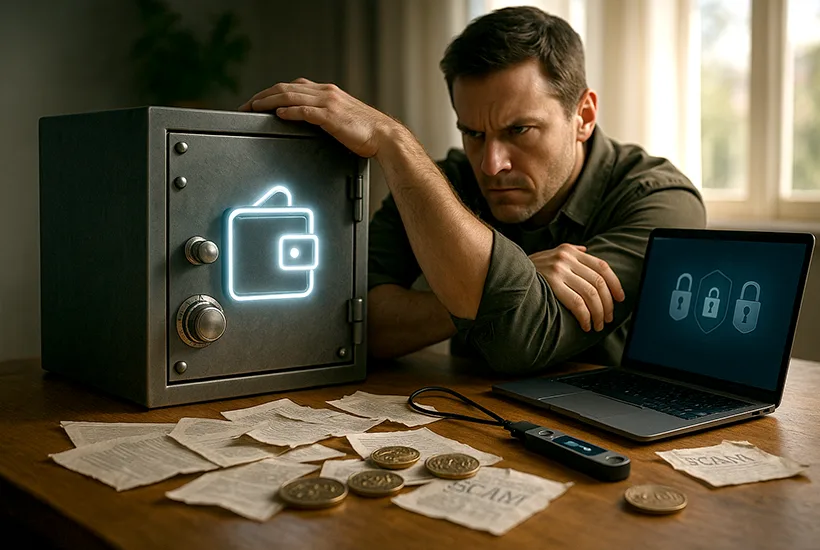



The crypto world is full of opportunity, but it’s also a magnet for scammers targeting the vulnerable. Every year, thousands of victims fall prey to fraudsters online, losing billions of their hard-earned money. That’s why knowing how to avoid scams is essential along with knowing the types of crypto scams out there.
In this guide, we focus on practical steps you can take to protect your funds, with informative dos and don’ts that can help you avoid becoming a victim. So, here are some actionable steps that you can take to avoid falling for a scam.
Table of Contents
Verify websites and apps before using them
Scammers often create fake exchanges or wallet apps that copy legitimate ones to steal your money or data.

What to do: Always access platforms through official channels. For example, if you’re using MetaMask, go to metamask.io directly and download the extension from there or a verified app store like Google Play or the Apple store. Bookmark trusted sites to avoid typos. Before entering login details, check the URL for accuracy.
What to avoid: Don’t click links in unsolicited emails or social media messages claiming to be from exchanges like Binance or Kraken. For instance, an email from “support@binance-security.co”. This is a fake domain, but it might tempt a beginner into entering their password on a lookalike site. Also, avoid downloading apps from third-party stores or random links, as they may contain malware.
Never share your private keys or seed phrases
Your private key or seed phrase is the master key to your crypto wallet. Sharing it is like handing over full control to scammers.
What to do: Store your seed phrase offline, ideally on paper kept in a secure location like a safe. When setting up a wallet, like Trust Wallet, write down the 12- or 24-word phrase during setup and never screenshot it. Enable two-factor authentication (2FA) on exchanges for extra security. For example, use an authenticator app like Google Authenticator for Coinbase logins.
What to avoid: Never enter your seed phrase on a website or app after setup, even if prompted. For example, a fake MetaMask pop-up might ask for your seed phrase to “verify” your wallet. But remember that legitimate platforms never do this. Also, avoid sharing your screen during “tech support” calls, as scammers can capture sensitive info when pretending to be helping out.
Research projects before investing
Many scams lure beginners with hyped-up projects that promise big returns but vanish after collecting funds.
What to do: Investigate a project thoroughly. Check its website, whitepaper, and team credentials on platforms with repute. For example, before buying a new token, ensure it has a clear use case and active development on GitHub. Join trusted crypto communities on Reddit or X to see what others say about the project.
What to avoid: Don’t invest in projects with anonymous teams or vague promises. For instance, a Telegram group promoting a DeFi token with “guaranteed 10x returns” but no verifiable team is a red flag. Avoid rushing into investments based on hype, like a token tied to a trending topic without a solid foundation.
Use secure tools and practices
Poor security habits can make you an easy target for scammers exploiting weak points.
What to do: Invest in a hardware wallet for long-term storage of large amounts. Regularly update your software and use antivirus programs to block malware. For example, scan your device with Malwarebytes before connecting to a DeFi app. Use unique passwords for each crypto account, managed via a tool.
What to avoid: Don’t store large amounts on exchanges or hot wallets like mobile apps, as they’re more vulnerable to hacks. Avoid using public Wi-Fi for crypto transactions, as it’s easier for scammers to intercept data. Never reuse passwords across platforms, as a breach on one could compromise your funds elsewhere.
Ignore unsolicited offers and promotions
Scammers often reach out via email, social media, or messaging apps with offers of free crypto or exclusive deals, just like a honey trap.
What to do: Delete or report unsolicited messages. If you see a post on X claiming, “Send 0.1 ETH to get 1 ETH back,” verify the account’s authenticity. Check for verified handles and how long these accounts have been active. Stick to official announcements from project websites or verified social media accounts.
What to avoid: Don’t send crypto to anyone promising rewards, like a “giveaway” from a fake account. Avoid clicking links in messages like “Claim your free NFT here!” as they often lead to phishing sites. Never engage with unsolicited DMs offering trading tips or airdrops.
Trust your instincts and take your time
Scammers rely on urgency and greed to cloud your judgment, pushing you to act fast without thinking.
What to do: Pause and research before acting. If a new exchange offers “200% returns in a week,” cross-check it on trusted forums. Use tools like Etherscan to verify smart contract activity for DeFi projects. For example, before staking in a new protocol, confirm it’s audited by a reputable firm.
What to avoid: Don’t fall for time-sensitive offers, like a “24-hour airdrop” that demands quick deposits. Avoid platforms or tokens pushed aggressively without clear details. If it feels too good to be true, it probably is.