




Goldman Sachs has filed for a Goldman Sachs Bitcoin ETF built around income, not pure upside. The proposed Bitcoin Premium Income ETF would track Bitcoin-linked products and sell call options against them.
That design gives Bitcoin exposure to investors while also collecting premium income. It visibly marks a sharper crypto move from a bank that stayed cautious under tighter rules.
Goldman Sachs Bitcoin ETF filing targets income seekers
The Goldman Sachs Bitcoin ETF aims at investors who want yield from crypto exposure. It does not chase every price jump. Instead, it trades away part of the upside to generate steady option income.

That structure looks familiar to traditional fund buyers. Covered-call equity funds use a similar playbook. They collect premiums, smooth returns, and usually lag in strong rallies.
According to the filing, the fund would place at least 80 percent of net assets in Bitcoin-linked exposure. That exposure may come from spot Bitcoin ETFs, options on spot Bitcoin ETFs, and Bitcoin ETF index options. Goldman would not hold Bitcoin directly inside the fund.
That distinction matters. Large banks still face tighter limits around direct commodity and digital asset exposure. By using listed funds and derivatives, Goldman can wrap Bitcoin inside a format many institutional investors already understand.
The filing also shows how product design has changed. Early Bitcoin ETF demand focused on access. Now issuers want to offer income, lower volatility, or more defined outcomes through structured products.
Why the fund uses options instead of holding Bitcoin directly
The fund plans to sell call options and collect premiums from buyers. Those premiums create income for shareholders. In return, the fund gives up part of the gains when Bitcoin rises quickly.
That trade appeals to a specific investor group. Some buyers want Bitcoin exposure but dislike its sharp swings. Others prefer a steadier return stream, even if that means capped gains.
The Bitcoin Premium Income ETF fits that demand. It offers a way to stay linked to Bitcoin without taking full spot market volatility. It also brings crypto closer to income strategies that investors already use in equities.
Wall Street has moved in this direction for a reason. Simple spot exposure no longer covers every investor need. Fund issuers now build products around yield, buffers, downside control, or defined participation.
That wider shift may matter more than the filing itself. Asset managers no longer market Bitcoin only as a high-conviction directional trade. They now package it as a flexible sleeve inside broader portfolio strategy.
Goldman Sachs Bitcoin ETF adds pressure on BlackRock
The Goldman Sachs Bitcoin ETF enters a segment that BlackRock already helped shape. BlackRock has prepared its own income-focused Bitcoin product after the rapid growth of IBIT. Recent filings showed it refining that structure ahead of launch.
Competition now extends beyond plain spot products. Issuers want to separate themselves through structure, not only scale. That creates room for covered-call funds, buffered products, and hybrid ETF wrappers.
Goldman’s filing also shows how quickly the market has evolved. The first wave centered on securing spot Bitcoin ETF approval. The next wave focuses on what kind of exposure investors want after that door opened.
Bloomberg ETF analyst Eric Balchunas said Goldman’s filing stood out because it used the 1940 Act. BlackRock filed under the 1933 Act. That legal choice shapes how the fund can hold exposure and how it fits within existing ETF rules.
Balchunas also noted that the 1940 Act route may require a Cayman subsidiary. That step can help funds work around limits tied to commodity exposure. He suggested Goldman may see a chance to move quickly or respond to client demand for Bitcoin with lower volatility and income features.
That point matters because it reframes competition. BlackRock built scale through direct spot exposure. Goldman now appears willing to compete through strategy design and product structure.
What the filing says about Goldmans wider crypto stance
The filing says something broader about Goldman’s posture toward digital assets. For years, the bank lagged peers such as JPMorgan and Morgan Stanley in rolling out crypto products. Executives often pointed to regulatory limits and the need for caution.
Now the tone looks more open. Chief executive David Solomon has said he owns a small amount of Bitcoin. He has also said he continues to study the asset and the broader market around it.
Solomon has spoken more positively about tokenization than about speculative trading. He sees blockchain infrastructure as part of a larger financial shift. That view helps explain why Goldman may prefer regulated wrappers over direct crypto risk.
The Goldman Sachs Bitcoin ETF fits that approach. It keeps the bank inside a familiar product structure. It also lets Goldman test demand without making a pure spot Bitcoin statement.
That is a meaningful change. Large banks rarely move first when rules remain unsettled. They usually enter when products can fit into established regulatory lanes and client demand looks durable.
Why the Goldman Sachs Bitcoin ETF arrives at this moment
The Goldman Sachs Bitcoin ETF filing arrived as Bitcoin rebounded toward $75,000 and briefly touched $76,000. Rising prices often revive demand for new products. They also make option income strategies easier to market because volatility stays active.
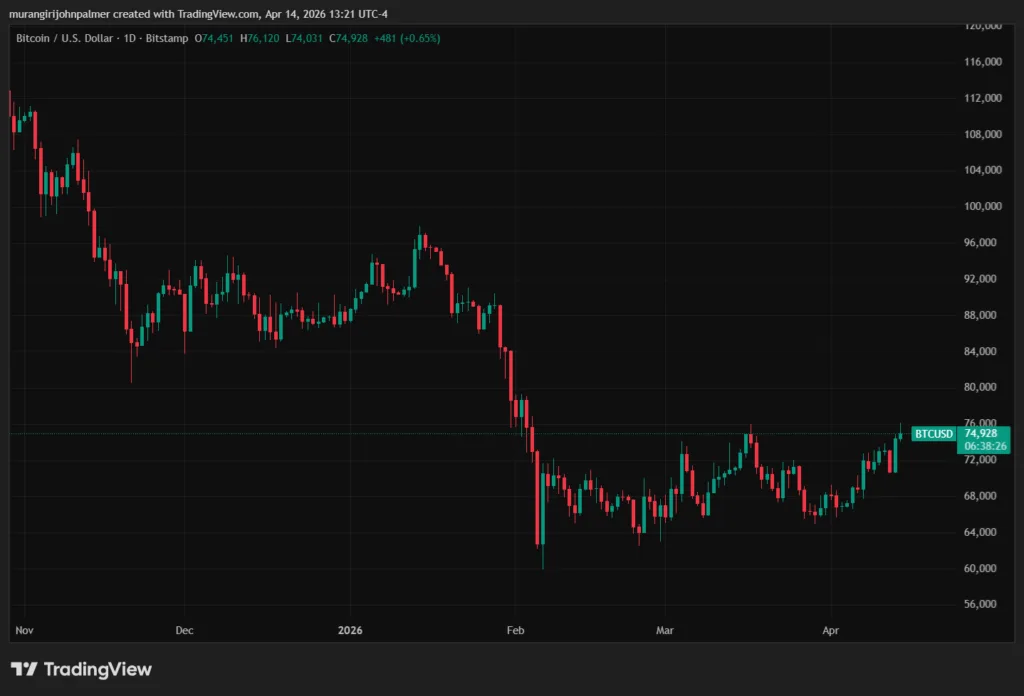
Timing matters for another reason. Income funds tend to perform best in flat or moderately rising markets. They often lag when Bitcoin breaks out hard, because written calls cap part of the upside.
That trade-off still appeals to many buyers. Some investors want crypto exposure without holding tokens, wallets, or exchange accounts. Others already own spot Bitcoin and may view an income ETF as a steadier complement.
The filing also reflects a market that has matured. Early crypto products targeted conviction buyers. Newer funds target portfolio builders who want more control over yield, volatility, and outcome shape.
Goldman’s structure shows that shift clearly. The fund would rely on Bitcoin-linked ETPs and options overlays rather than direct Bitcoin custody. That design gives traditional investors a familiar entry point while keeping exposure tied to the asset’s price behavior.
As that race intensifies, the Bitcoin Premium Income ETF stands out less for direct Bitcoin access and more for the way it packages risk. Balchunas called the filing a surprise and said Goldman may believe clients want Bitcoin exposure with less volatility, lower downside participation, and option income attached to that trade-off.