
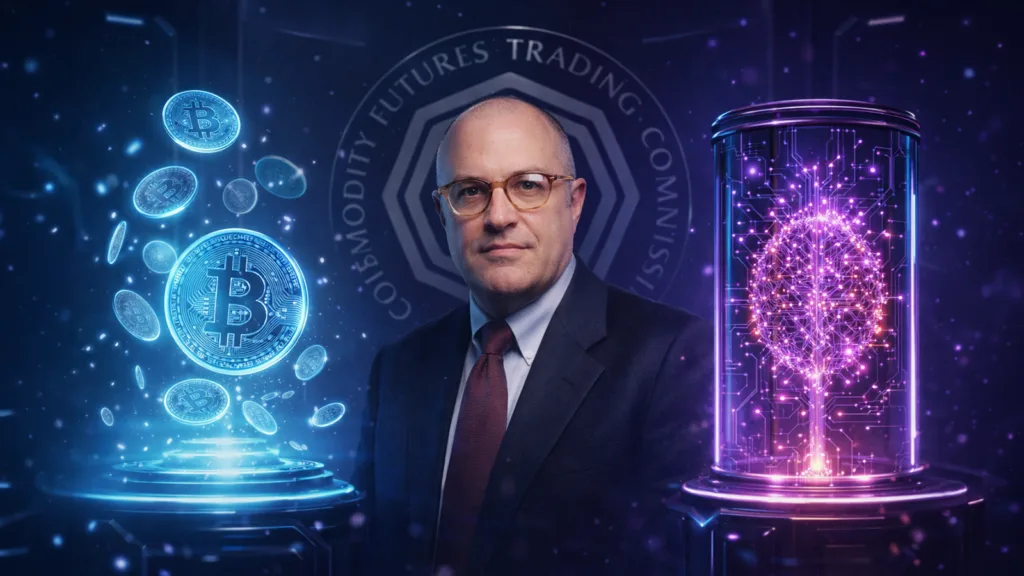



Chris Giancarlo, former Chairman of the Commodity Futures Trading Commission (CFTC), is quitting law practice to devote his entire time to crypto, AI, and policy research and advisory activity.
Giancarlo announced that he will retire from his position as senior counsel at Willkie Farr & Gallagher by the end of April following his efforts to develop the company as a digital asset practice.
His former role as regulator, also referred to as “Crypto Dad” by many in the crypto community, will focus on advising founders, company leaders and boards involved in fintech and digital assets.

”From here on, I’ll devote my time to advising founders & builders of #FinTech & #DigitalAssets and their CEOs and boards, research & writing on public policy issues, and continuing work with non-profit programs,” stated Giancarlo, in a statement shared on X.
His departure comes as crypto policy returns to the center of debate in Washington. The Senate is back in session with fresh attention on the CLARITY Act, while stablecoin policy and market structure issues remain active across Congress, regulatory agencies and trade groups.
Giancarlo exits law to expand crypto and AI work
Giancarlo said he is retiring from full-time law after six years at Willkie Farr & Gallagher. During that period, he advised digital asset firms on regulation and helped expand the firm’s crypto-focused legal work.
He now plans to shift his time toward advisory work, investing, writing and public policy efforts linked to crypto and AI.
”After six years building Willkie Digital Works, I’m retiring from law practice and heading out on an exciting new road – focusing on strategic roles rather than day-to-day operational responsibilities,” Giancarlo noted.
Giancarlo served as CFTC chairman from 2017 to 2019 after joining the agency as a commissioner in 2014. During his time at the regulator, he oversaw the launch of federally regulated Bitcoin futures through CME Group and Cboe Futures Exchange.
He also helped establish LabCFTC, the agency’s innovation unit for fintech and emerging financial technology.
After leaving government, Giancarlo remained active in digital asset policy and corporate advisory work. He became executive chairman of the Digital Dollar Project, a nonprofit initiative that supports research on a tokenized US dollar.
He also joined firms and industry groups in advisory and board roles, including work with Paxos, Sygnum Bank, Nomura and the Chamber of Digital Commerce.
Crypto policy returns to focus in Washington
Giancarlo’s move comes as lawmakers prepare for another round of debate on crypto legislation. Crypto In America journalist and host Eleanor Terrett posted on X that the Senate has returned with renewed focus on the CLARITY Act as lawmakers and industry groups await committee action.
Reports indicate that the Senate Banking Committee could issue a markup notice soon, though no formal step had been confirmed at the time of reporting.
The legislative discussion is not limited to market structure. Stablecoin policy also remains active as lawmakers and administration officials work through unresolved issues tied to yield, tokenization, decentralized finance and ethics rules.
Patrick Witt, executive director of the White House Crypto Council, told Crypto In America that a compromise on stablecoin yield had been reached.
”We’ll know we got it right when both sides are equally unhappy…and I think we probably arrived at that place,” Witt stated.
He also said he believed the remaining issues around DeFi, tokenization and ethics could be resolved in the coming days. It was not yet clear whether the updated text would be made public before any markup.
At the same time, the House returned to session for another week of hearings and financial policy debate. Events in Washington and New York are also set to keep digital asset policy in view, including a Solana Policy Institute program in Brooklyn and a Brookings Institution event on prediction markets.
Those discussions come as crypto policy continues to intersect with banking, capital markets and election-year politics.
Giancarlo stays active in policy debates
Giancarlo has kept a visible role in public policy since leaving the CFTC. He has supported work on a digital dollar and has spoken often on digital assets, financial reform and the use of blockchain in modern markets.
He has also been a public supporter of prediction markets, including recent legal efforts tied to Crypto.com’s dispute with Nevada gaming regulators.
His policy profile has kept him in public discussion during recent political transitions. Reports earlier this year stated that Giancarlo had been considered for the chairmanship of the Securities and Exchange Commission during President Donald Trump’s second term.
Giancarlo later said he was open to helping during the transition but had no interest in returning as a full-time regulator.
He is also preparing to release a new book in October titled The New Adventures of CryptoDad: The Quest for Financial Freedom in the 21st Century.
Giancarlo described the book as an account of the crypto industry’s recent development through political change and technology shifts. It follows his 2021 book, CryptoDad: The Fight for the Future of Money.
Alongside policy and advisory work, Giancarlo said he will spend more time on nonprofit efforts and philanthropy. He named the Digital Dollar Project and the Mike Gill Memorial Society among the programs he plans to continue supporting.
Banks and regulators step up crypto oversight
The policy debate continues as banking groups push back on parts of the White House approach to stablecoins.
As Coin Headlines reported on Monday, the American Bankers Association said the Council of Economic Advisers had framed the stablecoin yield question too narrowly. The group argued that the larger issue is what happens if yield-bearing payment stablecoins grow at scale.
Banks said such products could speed up deposit flight, especially from smaller lenders. They warned that lower deposits could raise funding costs and reduce local lending activity.
The response adds another layer to the stablecoin debate as lawmakers work through the details of pending legislation.
Regulators are also preparing for a bigger role if Congress advances market structure reform. On April 1, CFTC Chairman Michael Selig marked his first 100 days at the agency and said the commission is ready to oversee the full crypto market if lawmakers pass the necessary legislation.
His position adds to the broader shift now taking shape in Washington. Congress, the White House, regulators and trade groups are all moving through competing views on how crypto should be supervised.
Giancarlo’s exit from law practice comes during that same period, placing him in position to stay close to the policy debate from outside government.