


OpenAI has quietly acquired personal finance startup Hiro Finance, amid a deeper push into financial tools powered by artificial intelligence.
Media reports from Tuesday suggest that the AI giant will have a small team from Hiro join its desks post the completion of the acquisition.
While the financial terms were not disclosed, the startup, backed by A-list fintech VC firm Ribbit, as well as General Catalyst and Restive, confirmed it will shut down operations on April 20 and permanently delete user data by May 13 as part of the transition.

The move comes at a time when the race to dominate the artificial intelligence sector has picked up heat, with industry participants quickly catching up to establish big green back generating revenue models.
The deal could also be a quiet strategy by OpenAI to tap into the AI trading community, especially users who rely on robo-trading tools like OpenClaw.
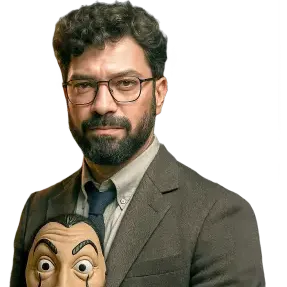
Right now, many of those users tend to prefer competing AI systems such as Claude from Anthropic for trading and automation tasks. However, by bringing in Ethan Bloch, who has already built his own trading agent called RoboBuffett, OpenAI gets someone who actually understands how these systems are used in practice.
So beyond personal finance, the deal might also be about improving OpenAI’s edge in AI-driven trading and attracting more of these power users over time.
Hiro provides extra edge to OpenAI
Founded in 2023 by entrepreneur Ethan Bloch, Hiro was a relatively young company that had only launched its AI-driven financial planning tool about five months ago.
The app aimed to simplify money management for everyday users by letting them input details such as salary, debts, and monthly expenses. Then it would run simulations to show how different financial choices, such as saving more money or paying off loans faster, could affect the future.
One of Hiro’s selling points was that it focused on reliable financial math, which was a problem for many earlier AI systems.
But as newer models have improved their numerical reasoning, tools like Hiro have become more practical for real-world financial planning rather than just basic budgeting advice.
The deal is notable not just because of the product, but because of Bloch’s history in fintech. He previously built Digit, a digital savings app that automatically sets aside small amounts of money for users.
Digit was also sold at more than $200 million in 2021, allowing him the reputation of transforming basic financial concepts into consumer goods on a large scale. Hiro seems to be an additional evolution in this process but concludes with the acquisition of talent instead of running alone for a long time.
OpenAI takes acquihire approach
OpenAI’s acquisition looks like a relatively unconventional one, closer to an acquihire strategy that allows recruiting specialized talent with expertise in finance-related workflow processes.
Considering how the use of AI-powered products such as ChatGPT is becoming more popular within the finance realm, it might be useful for the company to have in-house expertise in the field.
However, there may also be some clues about the possibility of integrating the acquisition with the recent surge in AI-powered trading and financial decisions. Bloch has personally tried developing an AI agent for managing investments. In a practical sense, the acquisition can demonstrate how the competition in the field of AI technology is changing.
It no longer involves solely enhancing existing models but acquiring niche startups to expedite research in particular industries. One of the areas of focus is likely to be finance, which is highly dependent on precision, reliability, and automation.