




Not long ago, cryptocurrency was synonymous with anonymity. Early bitcoin users would only need a wallet address and an internet connection to trade and transact with other users. But as cryptocurrencies grew from obscure experiments into the multi-trillion-dollar global industry that they are today, regulations and compliance requirements grew along with them. The “KYC” (Know Your Customer) process has become synonymous with the new cryptocurrency onboarding process.
Regardless of whether you are signing up for Binance, Coinbase, Kraken, or any other major exchange, providing ID credentials is now a requirement of the registration process. For many users, identity verification represents a contradiction to the decentralized nature of cryptocurrency. However, for regulators and financial institutions, KYC identification verification is an important step in bridging traditional finance to the digital asset economy. KYC is a tool used to combat fraud, money laundering, and terrorism financing, and serves as an important security measure while also helping to establish trust in the cryptocurrency ecosystem.
So, what does KYC in the world of cryptocurrency entail, and how did it become mandatory?

What is KYC in crypto?
KYC means “Know Your Customer”, which is a method used by banks and exchanges for verifying the identity of a person. Businesses in the cryptocurrency industry use KYC to identify customers before allowing them to trade cryptocurrency on their platform. Customers must provide personal information including name, date of birth, address and ID issued by the government, often accompanied by a selfie or facial verification.
The process stems from global financial regulations tied to Anti-Money Laundering (AML) and Counter-Terrorism Financing (CTF) laws. These frameworks are enforced by regulatory bodies worldwide and guided by organizations like the Financial Action Task Force (FATF), which sets international compliance standards.
The FATF states that good KYC processes are critical in preventing the use of digital assets for illegal purposes, which has influenced the developing regulations governing the use of cryptocurrency around the world.
How does KYC work in crypto?
Source: Binance
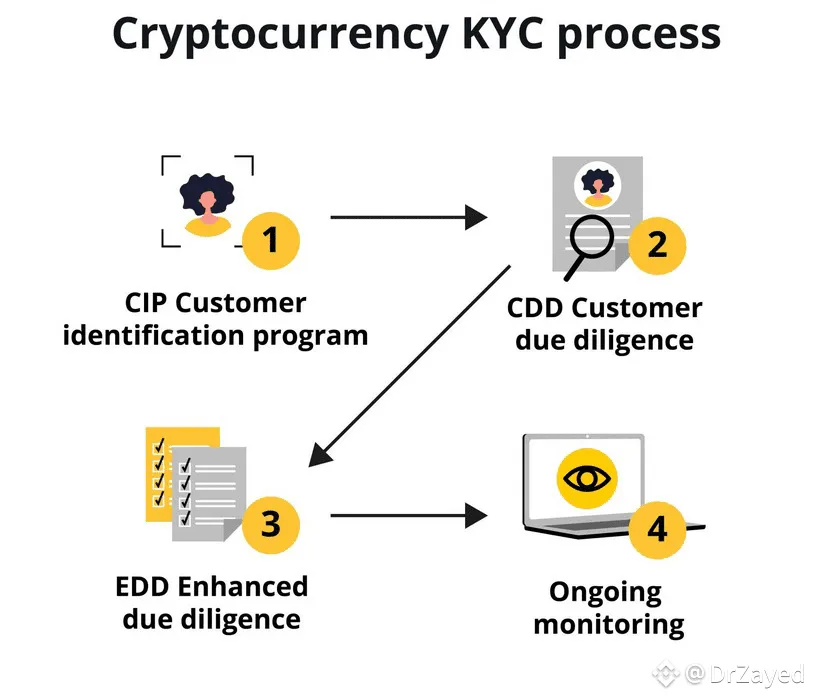
A crypto exchange operates on a structured process of 4 steps for verifying information from customers.
- Customer Identification Program (CIP): A CIP is just basic identity verification; customers provide basic information and proof of their identity (e.g., a government-issued ID) to show they are real individuals.
- Customer Due Diligence (CDD): A CDD checks customers against regulatory lists and databases to ensure they are not involved in any illegal activities.
- Enhanced Due Diligence (EDD): A higher risk determination may require additional documentation beyond those required under CDD (e.g., proof of income, source of funds) for deeper verification.
- Ongoing Monitoring: Once approved by an exchange, they continue to monitor for unusual or suspicious transactions.
Why crypto exchanges require KYC?
The main reason markets need KYC is to follow the rules set by government bodies. As of now, the government sees most crypto platforms as financial businesses or Virtual Asset Service Providers (VASPs). In other words, they need to follow the same rules for compliance as trade firms and banks.
If you don’t follow the rules, you could get in trouble. As per a 2023 report by Reuters and The New York Times, they reflected how big of a deal it was for Binance to pay over $4.3 billion in fines to U.S. officials for not following the rules. It showed how strict rules are being followed around the world.
Beyond regulation, KYC enhances platform security. Verified identities help exchanges detect suspicious behavior, stop fraud, and cut down on scams like account takeovers and money laundering. There are also important services that markets can offer, such as bank payments, higher cash limits, and trade features that big businesses can use.
How the KYC process works?
The KYC process on crypto exchanges is designed to be fast and user-friendly, often taking just minutes with automated verification systems powered by AI and biometric technology.
Most of the time, people begin by giving important personal information. Next, you’ll need to show a real ID from the government, like a driver’s license or passport. After that, your face will be scanned for verification purposes. Some sites may ask for proof of address, like a bank account or utility bill, especially for higher-tier accounts.
Most exchanges have tiered KYC levels. The basic KYC tier grants less access than the advanced KYC tier, while the ability to use fiats, trade derivatives in countries that support the same, and institutional features.
KYC vs. Crypto’s Original Vision
In the crypto world, people talk a lot about KYC. Satoshi Nakamoto, creator of Bitcoin, designed a way for people to send money to each other without going through a third party. For many early users, the need for identity checks feel like a departure from that vision.
However, the industry’s evolution has reshaped expectations. Crypto’s mainstream adoption has required a balance between decentralization and regulatory compliance. Banks, institutional investors, and payment providers can feel safe in the market thanks to KYC rules.
This shift has created a dual ecosystem, centralized platforms with KYC for accessibility and compliance. On the other hand, DeFi platforms operate without identity verification.
Benefits of KYC
It may seem like KYC is a bother, but it’s actually very helpful. Accounts that have been verified are better protected against fraud and unauthorized access. ID verification helps businesses get back in when users forget their passwords or their accounts are hacked. Anonymized systems don’t let you do this.
KYC also plays a crucial role in mainstream adoption. It’s simple to connect to banks and payment companies, has clear rules, and encourages institutions to join. According to a Chainalysis’s annual crypto crime trends report, less than 1% of all crypto trades in 2023 were illegal. This drop may be because of better attempts to keep an eye on things and follow the rules.
Crypto is now seen as a well-established type of financial asset thanks to these changes.
Privacy concerns and associated risks
Despite its benefits, KYC introduces privacy and security concerns, as the users will store sensitive personal information on a centralized service platform, which presents a target for cyberattacks. There have been several hacks of crypto service providers, reminding that these platforms need to ensure they have good security practices.
Further, privacy advocates have raised concerns about government surveillance and financial control based on the excessive regulation that threatens the decentralized nature of crypto.
Emerging technologies that can address these issues include Decentralized Identity (DID) and zero-knowledge proofs, among others. The ability of zero-knowledge proofs to confirm the compliance of a user without revealing unnecessary personal information- it has the potential to redefine KYC for Web3.
The future of KYC in crypto
KYCs continue to evolve from being a compliance burden imposed on companies by regulators to becoming a tech frontier for new innovations. As governments worldwide work towards more clearer frameworks for defining compliance regimes such as the EU’s MiCA regulation. Meanwhile, countries like Singapore and the UAE are positioning themselves as regulated crypto hubs.
As the evolution of Web3 continues, it is expected that it will also redefine the manner in which identity is verified. Through the use of decentralized identity, individuals will enjoy the ability to create reusable and privacy preserving credentials allowing them to initiate contact and transact with others across multi-platforms with little to no friction.
This combination of compliance and privacy are going to drive the next phase of crypto adoption.