



How markets stopped “discovering” prices and started computing them
The expression the invisible hand used to create a poetic effect for speakers who used it. The system operated because millions of people made choices based on their self-interests which created an overall pattern. Customers aimed to purchase items at lower prices. Merchants aimed to achieve maximum revenue. The system reached its equilibrium point through price modifications.
The markets achieved balance through the adjustment of prices. The system achieved its functioning ability through market processes that required no control from a central authority. The narrative continues to exist in educational materials and political addresses and market analyses.
The system requires additional components beyond its existing framework. Prices represent the combined result of human assessments that occur between two persons during an unknown trading space. The system produces them through its automated processes. The software handles their movement through different processes which include routing and matching and filtering and prioritizing and fragmenting and accelerating and reacting.

The hand exists at this moment but its current form departs from human characteristics. The appearance of the system has transformed into something that functions like a computer system. The evolution of markets throughout the previous twenty years extended beyond the introduction of electronic trading systems. The development of coordination functions transitioned from manual operations to automated processes.
The system which appeared to operate through natural processes now exists as programmed functions for all components including execution logic and market-making models and routing engines and risk controls and ranking systems and matching architectures and AI-supported workflows. The current market structure, which regulators use to understand modern markets, has become their new evaluation tool. The SEC identifies algorithmic trading as a fundamental matter in United States capital markets, but its 2026 market structure research shows how complex modern options markets have become. The European securities market, according to ESMA, has started to adopt AI technology, but companies anticipate their AI investment will continue to increase until 2027.
The market no longer reacts. It computes.
The fundamental error which people make about financial markets occurs when they believe markets create straightforward responses to incoming news. The existing language to explain human news processing became clear because people needed to understand its use. Traders reacted to a central bank announcement which followed a sequence of events that reached its conclusion through price changes. The current process functions through automated systems which handle continuous operations without human input.
Today price movements reveal hidden automated systems which function beneath their surface. The models start receiving their first signals. The system divides orders into smaller components. The system directs liquidity to different trading platforms. The risk management systems automatically change their exposure levels. Market makers update their price quotations every few seconds. The system uses additional models to identify market movements and react accordingly. The market systems function beyond existing market conditions.
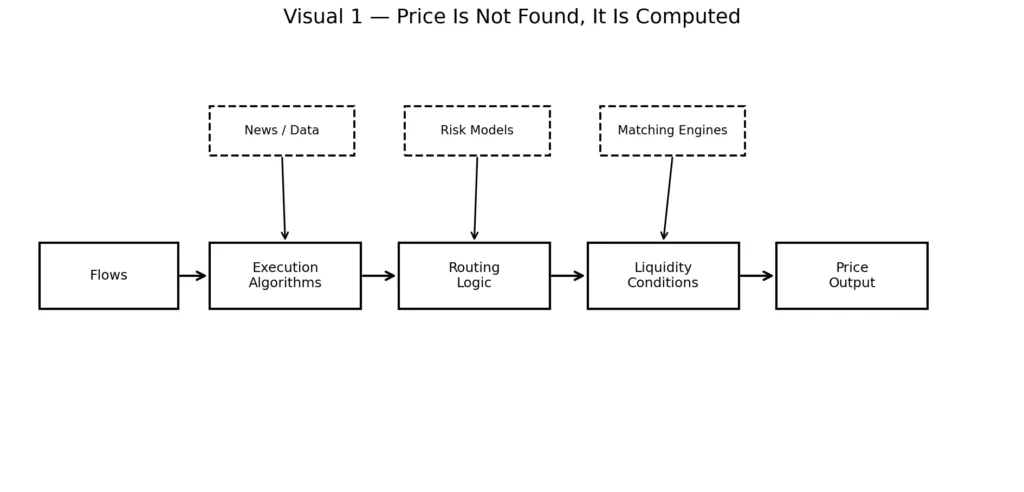
The market system calculates a dynamic state which results from market activities and operational restrictions and market probability distributions and market force distribution. The new belief system introduces complete change because it results in a new way to perceive the world. The shift matters because it changes what price actually is. Price now exists as a central hub where supply and demand meet because price functions in traditional markets.
Price now functions as the real-time result of multiple algorithms which compete to operate during periods of network delay and risk management limits and market distribution and customer behavior patterns. The world you describe shows that what appears to be consensus exists because all models operate in the same way. What appears to be sentiment exists because traders modify their positions. The system identifies market movements through routing patterns which interact with market areas that hold high trading volume.
Adam smith did not imagine smart order routing
The classical invisible hand assumed that decentralized systems would coordinate their activities without needing central design. The modern markets contain designed systems for their operational coordination.
The matching rules of exchanges get created through their design process. Brokers create their own paths to execute orders. High-frequency firms develop their systems to determine how they will place quotes. Asset managers create their own systems to manage their portfolio rebalancing. The index rules determine how passive investment flows will move.
Derivatives desks use gamma hedging to manage their risk. Retail orders get processed through three methods: internalization, wholesale distribution, and routing to other parties based on economic models that remain hidden from customers. The market functions as an open area where people gather to interact. The space has become a structured system. The design of every building expresses its value system through its built structure. The statement establishes that markets remain operational yet creates the impression of market deception.
The statement indicates that markets operate through created systems. The current “invisible hand” operates as a technical structure that people cannot observe. The matching engine together with smart order router and execution algorithm and queue-priority rule and risk-control threshold creates pathways that lead to price formation. The hand becomes invisible because all users lack access to the code which establishes the system’s incentives and basic operational infrastructure.
The present transition in regulatory focus occurs because authorities have started to examine actual operational processes which affect their work. ESMA’s recent supervisory direction emphasizes that firms may be using algorithmic systems even when those systems come from external vendors, and that outsourcing does not remove responsibility. The embedded code structure of the market creates a situation where all market participants lose their ability to understand what happens in the market.
Efficiency is real. so is fragility.
The supporters of algorithmic markets fail to understand one aspect of their defense which actually benefits these markets. The process of automatic trading has achieved multiple benefits through its ability to decrease trade execution expenses and to create narrower price ranges for various assets and to enhance trade execution methods and to provide better market access and to enable market participants to achieve greater trading efficiency.
AI together with advanced analytics technologies provides solutions that enhance trade surveillance systems and optimize liquidity sourcing operations and automate workflow management processes. Organizations maintain their investments in these systems because they deliver greater efficiency benefits. The 2026 evidence from ESMA demonstrates that large organizations have achieved the highest level of technology implementation while organizations plan to increase their AI expenditures during the upcoming two years.
Organizations that require digital transformation need to establish operational efficiency through their technology systems. The increasing use of identical system designs together with identical data sets and identical system components and identical system performance targets will result in greater system failure risk. The risk of algorithmic systems enabling coordinated behavior among algorithms constitutes an important danger that people tend to overlook.
The market appears to maintain sufficient depth until every trader attempts to update their positions simultaneously. A distributed system can maintain its appearance of distribution while relying entirely on a small number of cloud service providers and software vendors and model groups and data processing paths. The Financial Stability Board clearly identifies AI security weaknesses which result from organizations relying on external partners and technology links and cyber security threats and deficiencies in model management procedures whereas the organization alerts that supervisory systems need development to reach advanced monitoring capabilities.
The market requires this boundary to prevent decision-making errors from occurring. The invisible hand concept received previous recognition because it created public order through its operation of private human desires. The algorithmic control system generates public disorder through its capacity to alter local optimal operations into widespread system failure. The system requires no intent to cause harm. The system requires only matching patterns to operate.
Liquidity is becoming conditional intelligence
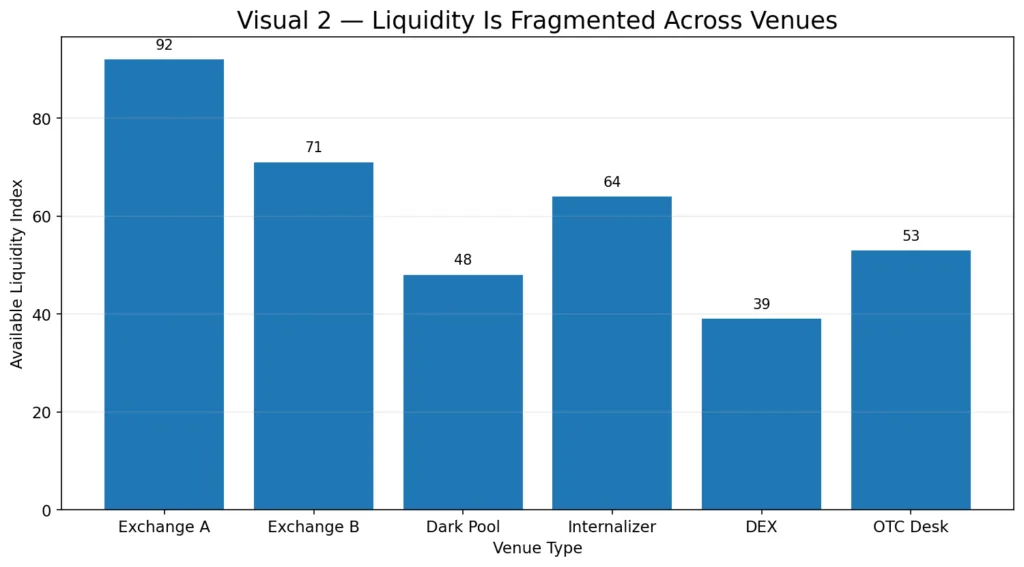
The traditional market theory treats liquidity as a physical substance which either exists or does not exist. Modern systems treat liquidity as conditional intelligence which operates under specific conditions. The algorithm generates instances of liquidity which it predicts will happen.
The system stops functioning when the adverse selection and toxicity and uncertainty levels exceed what the model can cope with. The current liquidity situation enables people to see ample resources during peaceful times. The system disappears at moments when all users require it most. The system does not experience human-like panic because it executes withdrawal procedures.
The system employs multiple methods to spread out its operations while terminTing its dangerous activities. The system executes its operations at machine speed while accessing multiple locations simultaneously. The perception of market confidence which observers gain from external perspectives represents a stable incentive system that destabilizes when input conditions shift.
The belief in free markets shows a fundamental misunderstanding of market operations. The crucial question is no longer whether markets are free. The real question is: free through what logic? The real question requires identifying through which matching rules and routing incentives and prioritization schemes and model assumptions markets operate. A modern market is not a crowd in a square. Automated conditional responses create a network that forms the basis of modern market systems.
The new power is not ownership. It is design.
The invisible hand functions as an algorithmic system, which enables markets to operate through design power instead of capital. The venue rules and ranking logic, execution path, displayed versus hidden liquidity incentives, model architecture, and risk thresholds all design elements that enable price discovery.
They create the conditions which allow price discovery to happen. The first element of evidence shows that he has created advantages over his competitors through his activities. This situation between digital finance and platforms establishes their common ground. Digital platforms use recommendation algorithms to control user visibility while financial platforms utilize market design to affect their results.
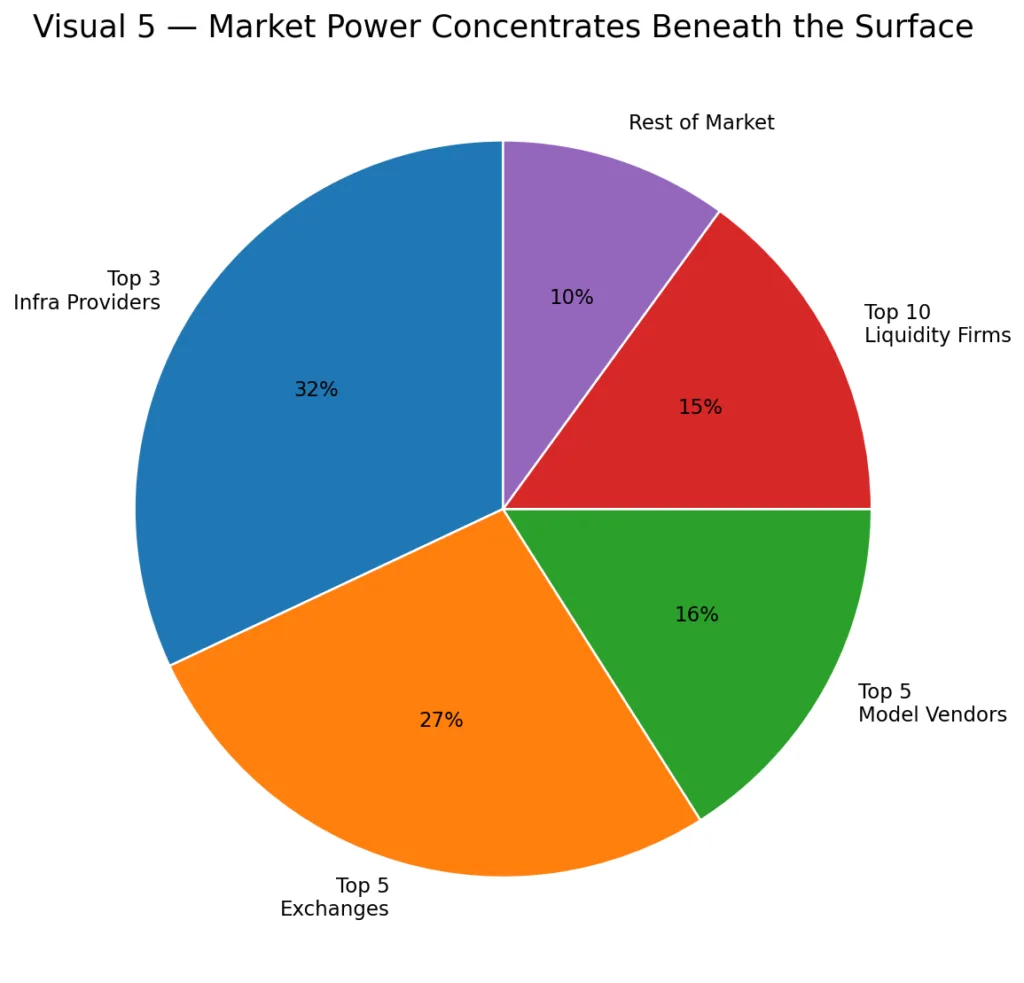
The financial design creates financial elements which include spreads, fills, queue position, volatility transmission, and liquidation cascades instead of producing clicks and impressions. The current situation creates better solutions for the modern market problems which exist in the current system. The prices overshoot because of algorithmic reaction functions which create self-reinforcing cycles. Market players experience unexpected breaks because liquidity conditions only lasted for a limited time. The market advantages multiple participants because their infrastructure and latency systems meet design requirements before they enter the fundamental phase.
The future market will be less human-facing and more machine-native
The next stage is already visible. Markets are not just becoming algorithmic. The markets are transforming into systems which operate entirely through machine technology. According to ESMA AI usage needs to be more widespread yet the organization observes that automation will lead to improved decision-making systems and multiple model implementations and increased use of third-party systems.
Official organizations recognize that monitoring processes need more development because their current state is incomplete and scattered. The following elements will shape market structure discussions which will take place during the upcoming ten years. The battle does not exist between people and machines. The current way of presenting the issue fails to capture its complete complexity.
The essential question requires societies to decide whether they comprehend that their invisible hand system has transformed into a controlled framework which depends on specific systems and follows hidden procedures. Algorithms which control a market create a situation where the market becomes highly effective yet its operations become harder to understand and monitor and it develops automatic reactions.
Human actions in the past created an invisible hand which distributed control to multiple people. The new system uses programming through technological systems and optimization methods to achieve coordination. The person who creates and controls the programming process will gain exclusive authority over the coordinated system operations.