



Robinhood OpenAI investment moved from speculation to disclosure on April 22 after Robinhood Ventures Fund I said it had bought about $75 million of OpenAI common stock on April 17. The deal gives public investors indirect exposure to one of the most watched private AI companies through RVI, the closed-end fund Robinhood listed on the NYSE in March.
Robinhood OpenAI investment puts RVI in the spotlight
The Robinhood OpenAI investment stands out for both size and timing. Robinhood said the OpenAI purchase ranks among RVI’s largest investments so far, and it adds the ChatGPT maker to a portfolio that already includes Databricks, Ramp, Revolut, Stripe, ElevenLabs, Oura, Airwallex and other late-stage private names. Robinhood introduced RVI as a retail-friendly vehicle with no accreditation requirement, no investment minimum and no performance fee.
That framing matters because Robinhood is not presenting the OpenAI position as a one-off bet. It is treating the stake as another step in a larger attempt to turn private-company exposure into a listed product ordinary investors can buy and sell on an exchange.

In March, Robinhood raised about $658.4 million for the fund’s debut and positioned it as a way to open a market long dominated by venture capital firms and other large institutions.
How the 2025 token dispute set up this new OpenAI move
The Robinhood OpenAI investment also lands against a different backdrop than last summer’s clash. On July 2, 2025, OpenAI publicly distanced itself from Robinhood’s EU stock-token launch and said it had not partnered with the brokerage on tokens linked to OpenAI.
OpenAI also said it did not endorse the offer and was not involved in it. Robinhood described that giveaway as a limited promotion enabled through a stake in a special purpose vehicle.
That earlier dispute mattered because it exposed the core issue of what retail investors were actually getting. OpenAI warned that the tokens were not OpenAI equity, while Robinhood argued they offered indirect exposure.
The new RVI purchase does not erase that debate, but it does move the relationship onto firmer ground: a disclosed fund position in actual OpenAI common stock rather than a promotional token tied to private-market exposure. The new investment is a sign that tensions between the two companies have eased.
However, buying RVI does not give investors direct ownership of OpenAI shares. Investors buy shares of a listed fund whose portfolio includes OpenAI among other private companies, and Robinhood itself warns that an investment in RVI is speculative and carries a high degree of risk. That makes this structure cleaner than last year’s token controversy, but not simple.
Why Robinhood sees demand in private market investing
Robinhood’s timing reflects a wider market change that the company has been talking about for months. In its OpenAI announcement, Robinhood said the number of publicly traded U.S. companies fell from about 7,000 in 2000 to about 4,000 in 2025.
It also said private companies outnumbered public companies by more than 6.5 to 1 as of April 2024, and that the estimated value of those U.S. private firms passed $10 trillion in the first quarter of 2025.
Those figures help explain why retail demand keeps building around names such as OpenAI, Anthropic and xAI even before any IPO. More high-growth firms now stay private longer, raise huge late-stage rounds and scale outside public markets.
Robinhood is trying to convert that gap into a product category by offering listed access to mature private companies instead of asking small investors to wait for an IPO that may take years or may never come.
RVI’s structure shows how Robinhood wants to pitch that access. The fund began trading on March 6 under the symbol RVI and holds a concentrated basket of private companies rather than a broad venture index.
Robinhood says the product is built for retail investors, but also private valuations can swing sharply and that the exit market for venture-backed firms has stayed uneven. Robinhood has tried to limit some of that risk by favoring later-stage businesses with established scale.
What the Robinhood OpenAI investment means for HOOD
Markets treated the news as constructive on Wednesday. Recent data indicates Robinhood shares rose 3.6 percent after the announcement. By 13:49 UTC, HOOD traded at $89.01, up $2.58 on the session, while RVI traded at $27.90, up $3.48.
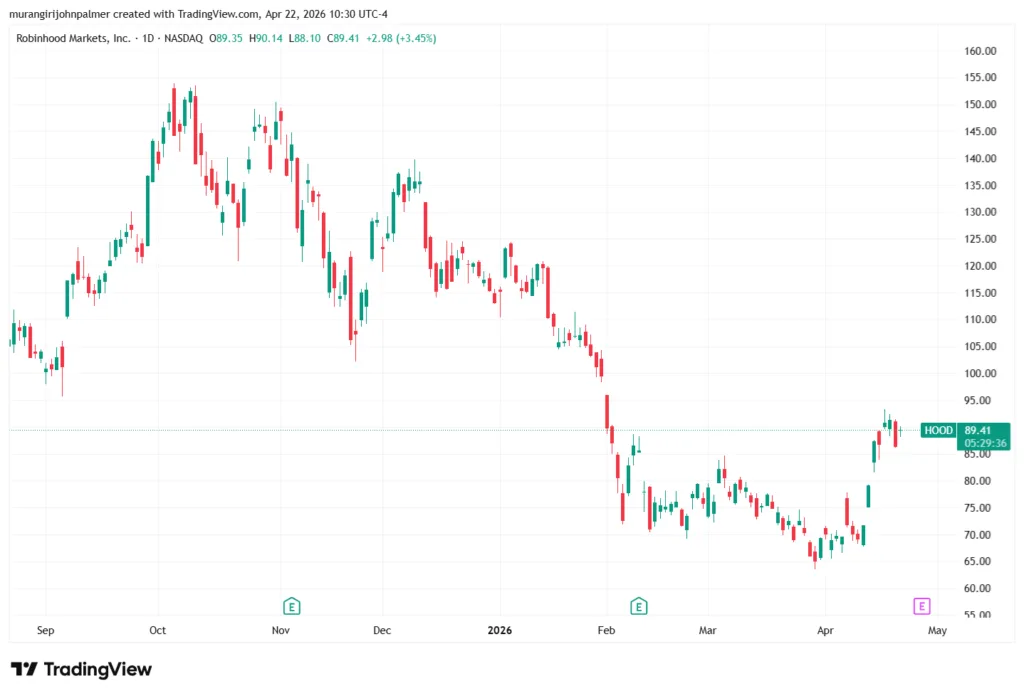
The Robinhood OpenAI investment may help Robinhood on branding as much as portfolio construction. Last year, the company tried to build excitement around tokenized exposure and ran straight into questions about legal approval, equity rights and investor understanding.
This time, Robinhood is using a conventional listed fund, a disclosed stake size and a portfolio format that investors can examine more easily. The tradeoff is that RVI buyers take on fund-level valuation risk, liquidity discounts and the uncertainty that still surrounds private-market pricing.